|
Product |
GPT-Realtime-1.5 by OpenAI |
|
Category |
Realtime voice AI model for developers |
|
Best for |
Voice agents, customer support and live speech interfaces |
|
Inputs |
Text, audio and image |
|
Outputs |
Text and audio |
|
Context window |
32,000 tokens |
|
Maximum output |
4,096 tokens |
|
Pricing |
Usage-based API pricing |
|
Voice choices |
Ten built-in voice options |
|
Overall rating |
3.2/5 |
|
Verdict |
Fast and capable for voice work, but not the best choice for every new project |
Quick Verdict
GPT-Realtime-1.5 is built for one thing people immediately notice: natural, low-latency voice conversations. It can listen and reply in speech without forcing every moment through a visibly separate transcription and text-to-speech chain. That makes a well-built voice assistant feel quicker and less mechanical.
ICON POLLS gives GPT-Realtime-1.5 a 3.2/5 rating in 2026. It remains a serious voice model for teams that value responsive speech, flexible session connections and clear instruction following. The score is held back by a familiar reality: the model is now a non-reasoning option in a rapidly moving family, while newer realtime models are better positioned for complex reasoning, tool decisions and more demanding automation.
What Is GPT-Realtime-1.5 by OpenAI?
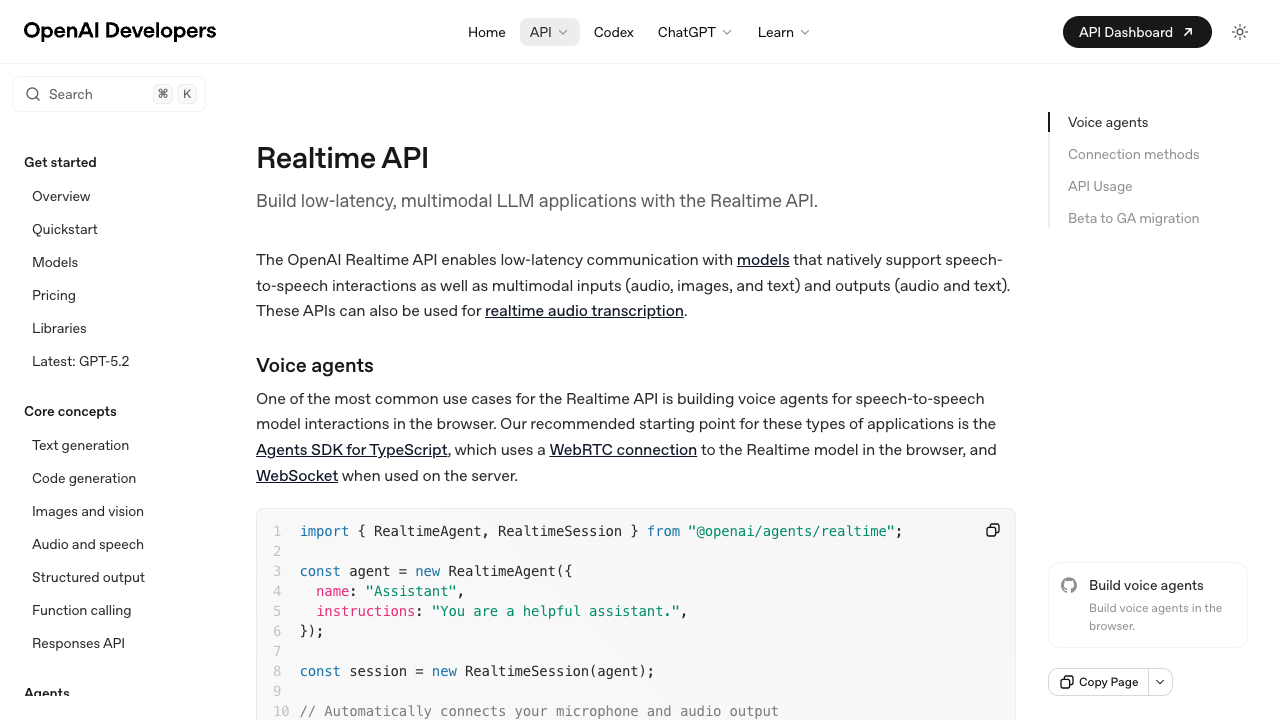
GPT-Realtime-1.5 is an API model made for live, speech-to-speech experiences. It accepts audio, text and image input, and can respond in audio or text. In practical terms, it is aimed at the developer building a voice agent into an app, support line, booking flow, learning product or interactive service.
This is not a standalone consumer app that someone downloads and starts using on its own. It is a developer product. The quality users hear depends on the model, the prompt, the microphone, network conditions, the interface and the rules the development team puts around it.
GPT-Realtime-1.5 Pricing in 2026
Pricing is usage-based, which means it can look simple in a table but deserves close attention in a live product. For text, the listed rate is $4 per one million input tokens, $0.40 per one million cached input tokens and $16 per one million output tokens. Audio input is listed at $32 per one million tokens, while audio output is $64 per one million tokens. Image input is $5 per one million tokens, with cached image input at $0.50 per one million tokens.
That structure makes the model sensible for focused, high-value conversations. It can become expensive when a product keeps many users talking for long periods, repeats unnecessary context or sends too much audio. A team should test real call lengths, not just one short demo, before deciding that the cost is comfortable.
GPT-Realtime-1.5 Voices
The model offers ten built-in voice options: alloy, ash, ballad, coral, echo, sage, shimmer, verse, marin and cedar. The voices give product teams a reasonable starting range, from more neutral delivery to warmer or more distinctive styles. Marin and cedar are generally the strongest choices when clean overall voice quality is the priority.
There is one important setup detail. Once the model has produced audio in a session, the selected voice cannot be changed for that same session. That is not a deal-breaker, but it means teams need to choose a voice before the conversation begins and keep their user experience consistent.
GPT-Realtime-1.5 Example
A simple example is a travel-support voice agent. A caller says, “I need to move my flight to Friday morning.” The agent can acknowledge the request in speech, ask for a booking reference, call an approved booking tool and explain the available options. For this kind of workflow, the best prompt is not a long wall of text. It should clearly state the role, tone, language, what the agent may do, what it must confirm and when it should transfer the user to a human.
The model works especially well when the task is direct: answer a common question, collect a few details, look up a record or guide someone through a defined process. It is less convincing when it is expected to solve a difficult multi-step problem without strong tools, clear rules and escalation paths.
GPT-Realtime-1.5 Docs and Setup Experience
The documentation is detailed enough for experienced developers, with paths for browser-based connections, server connections and phone-style systems. It also covers conversation sessions, tools, transcripts and cost management. The model can be used for realtime interactions through WebRTC, WebSocket or SIP, so teams are not pushed into one type of application.
The tougher part is that realtime voice is not a one-click feature. Developers still need to secure sessions, handle interruptions, set up permissions, test noisy audio and protect customers from wrong actions. The documentation explains the building blocks, but a reliable public-facing agent needs thoughtful product work around the model.
User Experience: What It Feels Like in Practice
When implementation is good, GPT-Realtime-1.5 feels fast, natural and easy to talk to. It can follow a requested personality, pacing and language structure better than many older voice systems. This matters when a brand wants the assistant to sound calm, concise and helpful instead of overly cheerful or robotic.
The limitation is that a natural voice does not automatically mean a reliable business experience. A customer may forgive a slightly synthetic voice more easily than an assistant that misunderstands an address, changes the wrong booking or gives a confident but incorrect answer. For customer support, the right approach is to limit sensitive actions, confirm key details and make human escalation easy.
Pros and Cons
Pros: Fast speech-to-speech interactions, useful voice range, strong control over tone and pacing, broad connection options, and solid support for structured voice-agent workflows.
Cons: Audio usage can add up, it does not provide the deeper reasoning controls of newer realtime options, voice cannot be switched after audio starts in a session, and production quality depends heavily on implementation.
Final Rating: 3.2/5
GPT-Realtime-1.5 is a good voice model, but it is no longer the obvious answer for every new AI voice project. ICON POLLS rates it 3.2/5 because it is fast, usable and still very capable in the right hands, yet the market now expects more reasoning, stronger tool control and better cost planning from a flagship voice system.
Choose it when responsive, non-reasoning speech conversation is the main job and you can keep the workflow focused. Teams with complicated support cases, high-stakes actions or long sessions should compare it carefully with newer realtime options before committing.
Frequently Asked Questions
1. What is GPT-Realtime-1.5 by OpenAI?
It is a developer model for low-latency voice conversations that can take audio, text and image input and reply in audio or text.
2. Is GPT-Realtime-1.5 a ChatGPT app?
No. It is an API model for developers, not a standalone app for ordinary users to download.
3. How much does GPT-Realtime-1.5 cost?
It uses token-based pricing. Text input starts at $4 per million tokens, while audio input and output cost more because voice processing is more resource-intensive.
4. Which voices does GPT-Realtime-1.5 have?
It has alloy, ash, ballad, coral, echo, sage, shimmer, verse, marin and cedar.
5. Can I change the voice during a GPT-Realtime-1.5 session?
Not after the model has already emitted audio in that session. Select the voice before the conversation starts.
6. Can GPT-Realtime-1.5 understand images?
Yes. It can accept image input, alongside audio and text input.
7. Does GPT-Realtime-1.5 support video?
No. Video is not supported by this model.
8. What is GPT-Realtime-1.5 best for?
It is best for responsive voice agents, customer support flows, guided conversations and other clear speech-to-speech tasks.
9. Does GPT-Realtime-1.5 reason through complex tasks?
It is positioned as a fast, reliable non-reasoning speech-to-speech model. Complex tasks need careful tools, rules and escalation.
10. How can developers connect to GPT-Realtime-1.5?
Common realtime connection methods include WebRTC, WebSocket and SIP.
11. Is GPT-Realtime-1.5 good for customer service?
It can be, especially for clear and repeatable support journeys. Sensitive actions should include confirmation steps and a path to a human agent.
12. Why did ICON POLLS rate GPT-Realtime-1.5 3.2/5?
The rating recognises its speed and voice quality, while accounting for its usage costs, setup demands and newer models with stronger reasoning features.