
Quick Verdict
IKEA is one of the most recognizable retail brands in the world and for decades that recognition was earned. Affordable design, functional flat-pack furniture, and the store experience that became a cultural institution gave millions of households access to reasonably well-made home goods at prices that made a furnished home achievable for people on genuinely tight budgets. That version of IKEA still exists in the imagination of many shoppers who walk through the doors or land on ikea.com. What we found when we actually looked at the documented customer experience in 2026 is something that has drifted significantly from that reputation. Delivery failures are epidemic and documented across every major consumer review platform. Refunds that take months despite company policy promising weeks. Kitchen orders running to tens of thousands of dollars that are still incomplete three months after installation began because IKEA keeps sending the wrong parts. Items cancelled without notification after customers have driven hours to collect them. Customer service that consists of long hold times, contradictory information between agents, and promises that are not kept. Quality complaints about laminate that chips within weeks, wardrobe backs that develop mould, and components that fail under normal use well within their guarantee period. The rating of 1.3 reflects all of this. The products score higher and prevent the rating from reaching the floor that the service experience alone would justify.
At a Glance: Icon Polls Ratings
Here is how IKEA scored across the areas we evaluated in our 2026 research:
|
Category |
Stars |
Score |
|
Product Design and Aesthetics |
★★★☆☆ |
3/5 |
|
Price Value for Standard Items |
★★★☆☆ |
3/5 |
|
In-Store Experience |
★★☆☆☆ |
2/5 |
|
Online Shopping and Order Management |
★☆☆☆☆ |
1/5 |
|
Delivery Reliability |
★☆☆☆☆ |
1/5 |
|
Product Quality Consistency |
★★☆☆☆ |
1.5/5 |
|
Customer Service and Complaints |
★☆☆☆☆ |
1/5 |
|
Overall |
★☆☆☆☆ |
1.3/5 |
What Is IKEA?
IKEA is a Swedish multinational retail company that designs and sells ready-to-assemble furniture, home appliances, and accessories. It was founded in 1943 by Ingvar Kamprad in Agunnaryd, Sweden, with the name standing for Ingvar Kamprad Elmtaryd Agunnaryd, combining his initials with the names of the farm and village where he grew up. The first dedicated furniture store opened in 1958, and the flat-pack concept that defines the brand today emerged from practical logistics solutions in the early 1960s.
By 2026, IKEA operates more than 460 stores across 60 countries and ranks among the world's largest furniture retailers. The brand has an enormous global footprint, its blue and yellow box stores have become landmarks in suburban retail landscapes everywhere from Stockholm to Seoul. The website ikea.com handles hundreds of millions of visits annually, and the IKEA catalogue, now discontinued in print but maintained digitally, was at its peak one of the most widely distributed publications in the world.
The IKEA business model is built on four pillars: Scandinavian design sensibility at affordable price points, flat-pack packaging that reduces shipping volume and allows customers to transport items themselves, self-service in store and self-assembly at home, and a product range designed to be democratic in the sense of being accessible to ordinary household budgets. For decades, these pillars worked together in a way that built one of the most trusted and beloved retail brands in the world.
The question this review addresses is whether IKEA in 2026 still delivers on those pillars in practice, not just in brand imagery. The answer, based on what we found across thousands of documented customer experiences from the past twelve months, is that the gap between the brand promise and the actual delivery experience has widened to the point where it deserves honest and detailed documentation.
IKEA Stores: The In-Person Experience
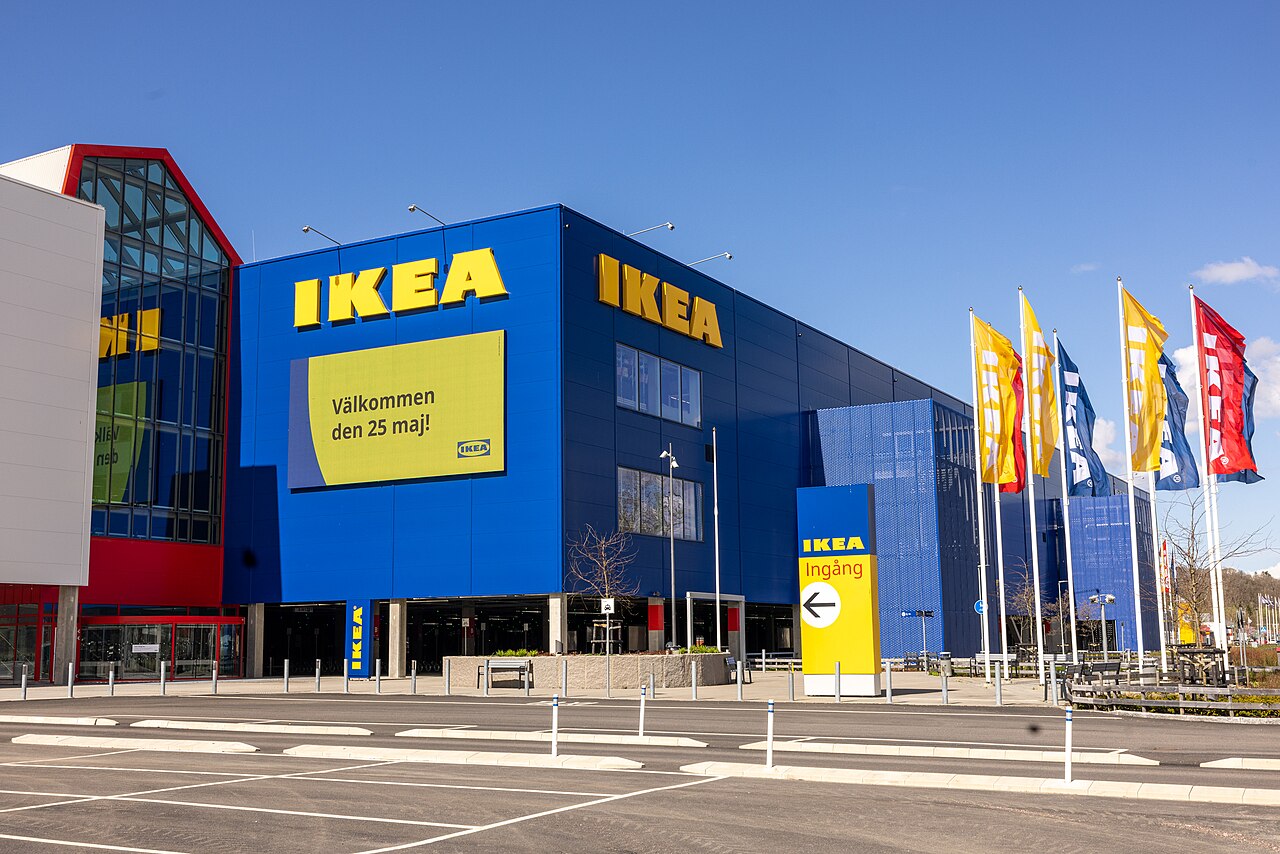
Walking into an IKEA store in 2026 is still a distinctive experience. The showroom format, where room-sized displays demonstrate how specific furniture pieces can work together in realistically sized living spaces, remains one of the most effective product presentation formats in retail. For customers who benefit from seeing furniture in context rather than as isolated items on a white background, the IKEA showroom is genuinely useful. The Swedish food hall, the restaurant, the range of small accessories and textiles alongside the larger furniture items, all of this creates an environment that more closely resembles a day out than a furniture-buying errand.
The problems begin when the in-store experience intersects with the operational systems behind it. Multiple 2026 reviews from UK, US, European, and Australian customers document stock discrepancies where items shown as available in the store or on the website are not actually in stock by the time a decision is made. Online stock and in-store physical stock systems frequently disagree, leading customers to make journeys to stores for items that have already sold out. One Trustpilot reviewer in 2026 describes arriving at a store as scheduled for a collection only to find their entire order had been voided and restocked without any notification.
Staff levels in stores have been cited as inadequate at many locations. One UK Trustpilot reviewer from February 2026 documented visiting the Leeds store to find a single server covering the entire hot dog cafe, ordering machines without printing receipts, refrigerated products still in their outer packaging, and no IKEA staff available to report the issues to, only a contracted security guard. These operational details speak to a broader pattern of cost management that has visibly affected the quality of the in-store experience at many locations.
The kitchen design and planning service is where in-store experience failures have the most serious financial consequences. Multiple 2026 reviews document customers who spent significant sums on kitchen design consultations only to receive incorrect planning advice that created structural problems, wrong parts that arrived with installations, or planning errors that were discovered only after installation had begun. One Trustpilot reviewer describes spending over 15,000 pounds on an IKEA kitchen that was still incomplete in May 2026 after work began in February, because IKEA repeatedly sent the wrong components. Another describes being told by store planning staff that their kitchen design would accommodate a quartz worktop, then being charged 200 pounds for a failed templating appointment when the installer arrived and discovered it could not.
IKEA Online Shopping: Where the Problems Compound
The shift toward online retail has exposed IKEA's operational infrastructure problems more clearly than the in-store experience does. When a customer walks out of a store with a flatpack in their car, there is an immediate transaction that closes cleanly. Online orders introduce delivery logistics, tracking systems, and fulfillment coordination that IKEA's infrastructure is failing to manage reliably.
The documented pattern of online order failures in 2025 and 2026 is consistent across consumer review platforms. Customers place orders, receive confirmation emails, and then encounter one or more of the following: deliveries rescheduled multiple times without credible explanation, packages arriving with missing components requiring a second order that also experiences delays, items arriving damaged without adequate replacement resolution, orders cancelled silently without customer notification, and parcels that tracking shows as delivered but that the customer never received.
A ConsumerAffairs reviewer from January 2026 describes placing an online order totaling over $1,200 that was never received, making multiple attempts to reach customer service through different channels, and receiving no meaningful support or resolution. A customer at Trustpilot describes a 12,000 euro order placed online where items listed as unavailable at time of order were never reserved, meaning the customer had no contract for those items, could not confirm delivery of all items simultaneously, and faced potential waits of over three months for items that might not be available by the time payment could be confirmed.
The website itself presents accurate-looking stock availability data that frequently does not match warehouse reality. This mismatch creates false purchasing confidence and results in partial deliveries that trigger the complaint and refund cycle. The ordering system for large purchases like kitchens has been documented by one Trustpilot reviewer as severely broken in 2026, describing the order logistics architecture in enough detail to make clear that the structural problem is systemic rather than isolated.
IKEA Products and Furniture: The Honest Assessment
It would be dishonest to write this review without acknowledging what IKEA's product range genuinely does well, because the design and price positioning remain real strengths even in 2026 when so much else has declined.
For standard furniture categories including BILLY bookcases, KALLAX shelving units, POANG chairs, MALM bed frames, PAX wardrobe systems, and LACK side tables, IKEA continues to offer a combination of functional Scandinavian design, a color and size range that works with almost any room, and prices that competing furniture retailers simply do not match. These items have been in the product range for decades specifically because they work. A BILLY bookcase does what it is supposed to do reliably, the assembly is manageable for one person with average DIY ability, and the finished result looks appropriate in most living environments. This is not nothing, and it is what built the brand's reputation.
Where product quality has become a documented concern is in the consistency of materials and build quality across product lines and over time. Long-term IKEA customers who bought furniture in the 2000s and 2010s often describe a noticeable difference in the laminate quality, hardware robustness, and material thickness compared to equivalent products in the current range. Multiple 2026 reviews describe laminate surfaces that chip or show wear within weeks of purchase under normal conditions, drawer runners that fail within a year, and structural elements that do not hold up to the loads a reasonable buyer would expect.
Specific 2026 product complaints documented in reviews include the MITTZON Foldable Table with a thin laminate layer that chips revealing white spots, PAX wardrobe back panels described as cheap quality paper mesh that absorbs humidity and develops mould, and HAVSEN ceramic kitchen sinks that crack under normal use within eighteen months. In the Havsen case, the reviewer documented IKEA's response as a four-month delay involving repeated requests for photographs from different angles followed by a denial of the claim on the grounds that the sink had been damaged, despite the same fault being documented in numerous other online reviews for the same product.
There is a relevant materials transparency issue documented for one product. A Trustpilot reviewer identified that the MIDDAGSMAT pot, while listed online with only stainless steel and aluminum in its materials details, carries an in-store label that discloses Formaldehyde, Octamethylcyclotetrasiloxane (D4), Decamethylcyclopentasiloxane (D5), and Decamethylcyclohexasiloxane (D6) as components. These are not ingredients that most consumers expect to find undisclosed on the online listing of a cooking pot.
Delivery: The Most Documented Failure
Delivery is where IKEA's 2026 customer experience collapses most visibly and most consistently. Across ConsumerAffairs, Trustpilot, Reviews.io, PissedConsumer, and the Better Business Bureau, delivery failure is the single most frequently documented complaint and the one with the most severe impact on customer trust.
The delivery problems take several distinct forms. The most common is repeated rescheduling without explanation. A Trustpilot reviewer in 2026 describes a sofa delivery that was rescheduled three times, each with unexplained circumstances, followed by a confirmation email for a new delivery date that was then cancelled again a few hours later with no explanation. Two weeks after purchase with full payment made, the sofa had still not been delivered. IKEA's response at each stage was to repeat that they regret the inconvenience.
Missing components in delivered orders is the second most common delivery failure pattern. For large assembly furniture including PAX wardrobes, kitchen installations, and bedroom furniture sets, customers regularly receive deliveries where one or more essential components are absent. The subsequent replacement order process mirrors the original failure: long waits, no proactive communication, and multiple contact attempts yielding contradictory information between agents. One BBB complaint documents a missing PAX wardrobe component that triggered a replacement order cycle that continued with no resolution for nearly two months despite daily customer contact.
Damaged items in delivery without adequate resolution represent the third major pattern. One ConsumerAffairs reviewer describes receiving a cabinet with cracks and chips visible upon opening, two weeks of contact with IKEA yielding runaround responses, an initial offer of a partial credit that was then retracted, and no resolution despite the item being clearly defective on arrival. One BBB reviewer describes receiving damaged parts and missing parts from the same order and spending months trying to resolve the situation with no meaningful progress.
The contraction of delivery drivers as a structural cause sits behind many of these failures. IKEA outsources its delivery logistics to third-party carriers in most markets, meaning when things go wrong, customers find themselves between IKEA's customer service and the third-party carrier's responsibility. One Trustpilot reviewer directly described losing 425 pounds due to what they characterized as a thieving delivery company that IKEA contracts with, with no meaningful resolution from IKEA. One ConsumerAffairs reviewer describes a driver who forgot to put ordered items on the truck, with the subsequent assembly appointment then being missed with no accountability.
Customer Service: The Defining Failure of 2026
If delivery is where IKEA's operational failures are most visible, customer service is where those failures become permanent customer losses. The documented customer service experience in 2026 is characterized by inaccessibility, contradictory information, unmet promises, and a structural inability to resolve problems that has been noted at every level from individual complaint resolution to formal consumer protection processes.
The most consistent customer service complaint is the hold time. Calls to IKEA's kitchen department in particular are documented requiring hold times of 50 minutes or more before reaching an agent. Some customers describe disconnections after extended waits that begin the entire process again. The email channel is documented as non-functional: multiple reviewers report sending emails that receive no response, not even an automated acknowledgment.
The information quality from agents is a separate documented problem from the access problem. Multiple reviewers describe receiving contradictory information from different agents on the same case, with promises made by one agent reversed by the next. A BBB complaint from early 2026 documents 14 hours of phone calls and nine emails over weeks of engagement, during which one agent approved a tender swap to refund to the original credit card only for upper management to later deny the refund without providing a reason or a contact, forcing the customer to a gift card they did not agree to despite IKEA's own policy clearly stating full refunds to the original payment method for unopened items returned within the policy window.
The UK Trustpilot platform for IKEA has 29,356 reviews as of May 2026. The pattern in the reviews is not of random service variability. It is a systematic pattern: customers who have problems describe cycling through bot responses, 50-minute hold waits, agents who provide information that does not match what other agents said, complaint escalations that go unanswered, and promises of callbacks or resolutions that do not materialize.
PissedConsumer's documented consumer advice for IKEA has reached the point where one verified reviewer specifically warns: do not take ANY actions based on what a customer service agent tells you. They are just blowing smoke hoping for a good review written before you find out that they are lying. This is not a description of a service that is struggling to meet demand. It is a description of a service that has functionally failed.
The kitchen installation service represents a specific and particularly consequential customer service failure category. Customers who spend substantial sums on kitchen design and installation services, often tens of thousands of dollars or pounds, enter a service relationship where post-purchase support is critical. Multiple 2026 reviews document kitchen installations that were incomplete for months after the scheduled completion date because IKEA sent wrong components, failed to respond to queries about the missing parts, and provided no path to escalation for a complaint. One Trustpilot reviewer describes an IKEA kitchen installation that began February 10, 2026 and was still incomplete on May 12, 2026 due to repeated wrong parts deliveries, with the customer describing the experience as thoroughly regretting spending the money.
Refunds: Holding Customers' Money
Refund delays at IKEA in 2026 have been documented across every consumer review platform as a persistent, multi-month problem. Customers who return items, receive pickup confirmations, and wait for refunds to process are routinely documenting waits of four to eight weeks, and in some cases several months, before funds are returned.
A Trustpilot reviewer documents waiting over a month for a refund despite multiple customer service contacts, each of which produced a new promise but no actual payment. A ConsumerAffairs reviewer describes a refund saga requiring the intervention of a credit card company after weeks of inaction, ultimately receiving money back only after the card issuer filed a dispute. A BBB reviewer documents an incorrect refund being issued as a gift card rather than to the original payment method, being told by one agent that this would be corrected, and then being told by a different agent that upper management had denied the correction without providing justification.
IKEA's stated return policy offers 365 days to return most items, a figure that sounds generous. In practice, the documented experience is that returning an item and actually recovering your money are different processes with very different timelines. The pickup of returned items is one step. Processing of the return at the warehouse is another. Initiating the refund is another. And actually delivering the funds back to the customer is a final step that review evidence suggests is often stalled by technical issues, manual processing delays, and a lack of proactive communication when those delays occur.
For customers who have experienced this refund cycle, the practical advice that appears in multiple review comments is to pay with a credit card and be prepared to file a chargeback if the refund does not materialize within a reasonable period. That advice should not be necessary for a company of IKEA's size and resources, but in 2026 it is the most reliable documented path to actually recovering money.
Pros and Cons
What IKEA Still Does Well
Product design for standard furniture lines like BILLY, KALLAX, MALM, POANG, and PAX remains genuinely functional, aesthetically neutral, and competitively priced against equivalent quality at other retailers
The in-store showroom format, where furniture is presented in realistic room-sized displays, remains one of the most effective ways to visualize how pieces will look in a real living space
The sheer breadth of the product range, from children's furniture to kitchen systems, lighting, textiles, and small home accessories, makes IKEA genuinely useful as a one-stop resource for furnishing a home or apartment from scratch
For simple, small items purchased in store where you can immediately inspect, pay, and carry away, the transaction can be clean and the price is often difficult to beat
The IKEA Family loyalty program and regular promotions provide meaningful savings for customers who plan purchases around them
The Documented Failures That Define the 2026 Experience
Delivery failures are epidemic and documented across all major consumer review platforms: repeated rescheduling, missing components, damaged items on arrival, silent cancellations without notification
Customer service is characterized by inaccessibility (50-minute hold times), contradictory information between agents, unkept promises, and no functional escalation path for serious complaints
Refunds take months rather than the weeks implied by company policy, routinely requiring credit card chargeback intervention to actually recover money
Kitchen installation services fail at a disproportionate rate given the financial stakes involved: wrong components, incomplete installations lasting months beyond schedule, and advice from planning staff that is later found to be incorrect
Online order systems have structural flaws where unavailable items are not reserved, stock availability data does not match warehouse reality, and orders can be cancelled silently without customer notification
Product quality consistency has declined from earlier IKEA eras, with laminate chipping, hardware failures within warranty periods, and specific product categories with documented recurring defects
Complaint resolution processes are designed around delay: four-month timelines for warranty claims, repeated requests for documentation from multiple angles, and eventual denials that contradict what customer-facing documentation about the guarantee suggests
There is no complaints department documented as reachable, with multiple UK reviewers specifically noting they were told to make complaints in-store even when stores are hours away, and that IKEA appears not to have progressed to email as a complaints channel
How IKEA Compares to Alternatives
IKEA vs Wayfair: Wayfair has its own well-documented delivery and customer service problems in 2026, so the comparison is not simply IKEA versus a reliable alternative. Wayfair's product range is far broader, covering items at every price point from every manufacturer. Wayfair's return policy and refund processing have their own reported friction. For simple furniture assembly products in the IKEA style and price range, IKEA's proprietary designs remain distinctive. For anything where reliable delivery or accessible customer service matters, the Wayfair experience is inconsistently better rather than systematically better.
IKEA vs local furniture stores: For customers who have been repeatedly burned by IKEA's delivery failures, a local furniture retailer with in-person purchasing, on-the-spot inspection, and a manager who can be spoken to directly when something is wrong represents a service model that IKEA structurally cannot replicate. The price difference for equivalent quality is real. But the cost of a failed IKEA delivery cycle, in time, in distress, and sometimes in lost money before a chargeback resolves it, often exceeds that price premium.
IKEA vs self-assembly alternatives (Argos, Dunelm, etc.): For buyers specifically interested in affordable flat-pack furniture without the IKEA ecosystem, regional alternatives exist in most markets. Their design and range are narrower. Their prices are broadly comparable. And their customer service, while not universally better, tends to have more accessible resolution paths than IKEA's documented 50-minute hold times and complaint-less complaints department.
Frequently Asked Questions About IKEA (2026)

1. Is IKEA worth buying from in 2026?
The honest answer depends on how you buy and what you buy. For simple in-store purchases of items you can immediately take home yourself, carry away on the day, and assemble without requiring any ongoing relationship with IKEA after the transaction, the products are often genuinely good value and the risk is manageable. The further your purchase moves from that scenario, the worse the odds get. Any purchase that involves delivery creates documented risk of failure. Any purchase that involves installation services creates documented risk of incomplete work and extended disputes. Any purchase that creates a refund or warranty claim creates documented risk of a months-long resolution process. IKEA in 2026 is worth buying from for simple, carry-away items where you accept the quality limitations and do your own assembly. It is not worth buying from for anything where you need the company to reliably deliver, install, or resolve a problem after the transaction.
2. What are the most common IKEA complaints in 2026?
Based on documented consumer reviews across ConsumerAffairs, Trustpilot, Reviews.io, PissedConsumer, and the Better Business Bureau, the most common complaints in 2025 and 2026 fall into five categories. Delivery failures account for the largest volume: items not arriving, being repeatedly rescheduled without explanation, or arriving with missing or damaged components. Refund delays represent the second major category, with waits of one to several months being typical and credit card chargebacks often required to actually recover money. Customer service inaccessibility is the third: hold times of 50 minutes or more, unanswered emails, and contradictory information from different agents when contact is made. Kitchen installation failures are particularly damaging given the financial stakes, with wrong components, incomplete installations, and planning advice that proves incorrect being documented at multiple points in 2026. Product quality issues in specific product lines represent the fifth category, with laminate chipping, hardware failures within warranty, and specific products with known recurring defects.
3. How long does IKEA delivery take in 2026?
IKEA's stated delivery timelines vary by region, order size, and delivery method, but the documented real-world experience in 2026 frequently diverges from the timelines communicated at checkout. For standard small-item delivery, timelines of one to two weeks are typical in most markets when the order goes smoothly. For large furniture orders, kitchen orders, or anything involving multiple items, the timeline extends considerably and the failure rate increases. Multiple reviewers describe deliveries that were originally scheduled within one to two weeks and ended up taking six to eight weeks after repeated rescheduling. For kitchen orders, gaps of three months or more between order and complete installation are documented in 2026 reviews. The practical guidance from documented consumer experience is to treat any IKEA delivery timeline as optimistic, not to make irreversible plans that depend on the delivery arriving on schedule, and to be prepared for the reality that the customer service escalation process in case of failure is time-consuming and often ineffective.
4. What is IKEA's return policy in 2026?
IKEA states a 365-day return policy for most unused items in their original packaging. For used items, a 180-day return window applies in most markets. This policy is more generous than most furniture retailers offer and remains a genuine advantage in theory. In practice, the documented experience of actually completing a return and receiving money back diverges from the policy text. Multiple 2026 reviews describe the multi-step return process, which involves arranging pickup, warehouse receipt confirmation, refund initiation, and payment processing, taking weeks to months rather than the 7 to 10 business days the policy implies. Several documented cases describe refunds being issued incorrectly as gift cards rather than to the original payment method, requiring further dispute resolution. For items purchased with a credit card, having the option to file a chargeback as a fallback is strongly recommended based on the documented pattern of refund failures.
5. How do I contact IKEA customer service?
IKEA customer service in most markets is accessible through phone, live chat on the website, and in some regions email. The phone line is the primary escalation route for serious issues, but multiple 2026 reviews document hold times of 50 minutes or more in the kitchen department and similar wait times for general order queries. Live chat on the website connects to an automated bot before escalating to a human agent, and the bot's resolution capability is limited to simple information requests. Email contact for complaints is described in multiple UK reviews as non-functional, with emails going unanswered for extended periods or receiving no response at all. For in-store purchases, going to the returns or customer service desk in person provides more reliable access to a human with some authority. For complaints about kitchen services specifically, the documented experience suggests contacting the kitchen department directly rather than general customer service. One ConsumerAffairs reviewer notes that starting by researching the CEO's email and contacting that level produced a callback, which should not be necessary to get basic customer service resolved but reflects the reality that standard channels are inadequate.
6. Does IKEA furniture hold up over time?
The durability of IKEA furniture varies considerably by product line, material, and year of manufacture. Long-term customers who purchased IKEA furniture in the early 2000s through 2010s often describe those items as holding up well over a decade of regular use. Reviews of more recent purchases, particularly items in lower price tiers or products using thinner laminate layers, are more critical. Specific documented quality complaints from 2026 include laminate surfaces that chip within weeks under normal conditions, hardware and drawer runners that fail within a year, and wardrobe back panels that develop mould. Solid wood and solid wood veneer products in the IKEA range tend to perform better over time than laminate and particle board alternatives. The ten-year guarantee on kitchen products provides a contractual protection, but the documented enforcement of that guarantee in 2026 includes four-month delays, repeated documentation requests, and denials on disputed grounds. For furniture in categories where longevity matters and where structural failure creates significant disruption, spending more with a retailer whose after-sales service is more responsive is the honest recommendation based on the documented 2026 experience.
7. Is IKEA online shopping reliable?
Based on the documented experience in 2025 and 2026, IKEA online shopping is not reliably delivering what it promises. The most consistent failure pattern is the gap between stock availability displayed during ordering and actual warehouse stock, which results in partial deliveries, back-ordered items with no communication, and in some cases complete order cancellations without notification. Large online orders are particularly vulnerable: a kitchen order or a multi-item bedroom purchase has more components to fail, more coordination required between warehouse picks and logistics, and more opportunities for the system to produce an outcome that differs from what was ordered. For small, single-item orders of products that are clearly in stock, the online order experience is more likely to go smoothly. For anything complex, the advice from documented consumer experience is to consider in-store purchase and carrying items yourself wherever physically possible, or to have a clear understanding of how to escalate delivery failures before you place the order.
8. How does IKEA's warranty work in practice?
IKEA offers product-specific guarantees ranging from one year on some accessories to 25 years on certain kitchen elements and structural components. The kitchen guarantee of ten years on worktops, fronts, and structural elements is the most significant. In theory, these guarantees provide meaningful protection. In practice, the documented experience of claiming under these guarantees in 2026 is consistent with the broader customer service pattern: lengthy waits, repeated requests for evidence from multiple angles, and in some cases denials that conflict with the apparent terms of the guarantee. One documented case involves a ceramic kitchen sink that cracked under normal use within 18 months of installation, a recognized recurring defect documented by multiple other reviewers. IKEA's response involved four months of delays and ultimately a denial on the basis that the sink had been damaged, despite the customer's documented argument that the cracking was a design fault. The gap between guarantee terms as written and the practical experience of invoking them is a recurring theme in 2026 IKEA complaint records.
9. Is IKEA kitchen installation worth it?
IKEA kitchen installations in 2026 are carrying a substantial volume of documented complaints that potential buyers should weigh carefully before committing. The installation service involves IKEA-recommended contractors who carry out the physical work, IKEA's own delivery of kitchen components, and an IKEA planning service for designing the kitchen layout. When all three elements work together correctly, customers describe being reasonably satisfied with the finished result at a price that competes with professional kitchen fitters using bespoke cabinetry. When any element fails, the consequences are serious. Documented 2026 problems include: planning staff providing incorrect structural advice that creates problems at installation, deliveries of kitchen components that include wrong items or missing items requiring new orders and extended waits, and completed installations that expose design advice errors only after significant money has been spent. Multiple 2026 reviewers spending between 10,000 and 20,000 pounds or euros on IKEA kitchens describe experiences that range from disappointing to genuinely distressing. Getting independent structural surveys before committing to IKEA's planning advice, checking that every component is correct before installation begins, and understanding the escalation path for disputes before signing anything are the practical precautions the documented experience suggests.
10. Are there good alternatives to IKEA for affordable furniture?
Yes. For buyers who have been consistently disappointed by IKEA or who want to reduce the risk that comes with IKEA's current delivery and service experience, several alternatives are worth considering depending on what you need. For simple flat-pack furniture in a similar price range, Argos in the UK and similar value-focused retailers in other markets offer comparable products at broadly similar prices with more accessible in-store service. For buyers willing to spend modestly more for significantly better build quality and service reliability, retailers like Barker and Stonehouse, John Lewis in the UK, or equivalent mid-market furniture retailers in other countries provide furniture that lasts longer and is backed by service infrastructure that can actually resolve problems when they occur. For specific product categories like shelving and storage, used furniture marketplaces including Facebook Marketplace and Craigslist often carry secondhand IKEA items from the earlier eras of production at low prices, with the additional benefit that the laminate durability question has already been answered by time. Online furniture retailers like Made.com in Europe or Article in North America offer modern design at competitive prices with better delivery reliability records than IKEA in 2026, though they lack IKEA's physical store browsing experience.
Icon polls Verdict
IKEA earns a 1.3 out of 5 from Icon Polls in 2026. The score is not primarily a verdict on the products, which for standard lines remain reasonably designed and competitively priced. It is a verdict on the full transaction experience that begins when you decide to buy something from IKEA and ends when you have the item assembled in your home and any problems have been resolved.
That full transaction, for a significant and documented proportion of customers in 2026, is failing. Deliveries are being missed, rescheduled, cancelled, or arriving incomplete. Refunds are taking months and sometimes requiring credit card disputes to recover. Customer service is providing hold times that last the better part of an hour, information that contradicts itself between contacts, promises that are not kept, and complaint escalation paths that are either non-existent or so inaccessible as to be functionally non-existent. Kitchen installations are creating financial losses in the tens of thousands of dollars or pounds for customers who trusted the planning service and installation coordination.
The brand's historical reputation is still doing real work in 2026, bringing customers to the stores and the website on the strength of memories and cultural familiarity. The product design still has genuine appeal. The prices are still low. But a low price that comes with a high probability of a delivery failure, a months-long refund cycle, or a kitchen installation that is still incomplete three months after it was supposed to be finished is not actually a good deal. The time, stress, and lost money that IKEA's service failures cost customers in 2026 have a real value that the product price does not compensate for.
The practical guidance from Icon Polls is direct: if you buy from IKEA, buy in-store for items you can carry away yourself. Pay with a credit card so you have chargeback protection. Do not buy kitchen or installation services unless you have read the specific failure pattern reviews and are confident your situation is different. Keep every receipt, confirmation, and communication record from the moment of purchase. And if something goes wrong, escalate to your credit card company and consumer protection agency sooner rather than later, because the internal IKEA complaint resolution system in 2026 is not reliably resolving legitimate complaints.