|
Platform Name |
Obooko |
|
Website |
www.obooko.com |
|
Founded |
2010 |
|
Founder |
Tony Stanton |
|
Current Leadership |
George (took over in 2025) |
|
Headquarters |
Lincoln, England, United Kingdom |
|
Company Type |
Private (OBOOKO LIMITED) |
|
Industry |
Digital Publishing / Free eBook Platform |
|
Total Books |
4,000+ titles |
|
Genres |
30+ |
|
Registered Readers |
800,000+ |
|
Total Downloads |
11 million+ |
|
Supported Formats |
PDF, EPUB, Kindle |
|
Pricing |
Free (Ad-supported) |
|
Mobile App |
No dedicated app (browser-based) |
|
Language |
English only |
|
Icon Polls Rating |
3.7 out of 5 |
What Is Obooko?
Obooko is a free ebook platform that has been around since 2010. It was originally built by a guy named Tony Stanton, a publishing industry veteran from England who wanted to create a place where readers could download legal, free books without dealing with piracy, paywalls, or dodgy file-sharing sites. The idea was simple: connect readers with authors who were willing to share their work for free, and keep the whole thing funded through advertising.
Fast forward to 2025, and the platform changed hands. A new owner named George, who describes himself as a UX designer and entrepreneur, took over and rebuilt Obooko from the ground up. The result is a cleaner, more modern reading experience that now includes an in-browser reader, cross-device syncing, and a growing catalogue of over 4,000 books across more than 30 genres.
Icon Polls decided to take a proper look at how Obooko holds up in 2026 to see if it actually delivers on its promise of free, quality reading, or if there are gaps that readers should know about before jumping in.
Books and Library
Obooko currently hosts over 4,000 free ebook titles across 30+ genres. That includes romance, crime, thriller, fantasy, science fiction, horror, historical fiction, self-help, teen and young adult, and a collection of classic books. The platform also publishes curated staff picks and seasonal reading lists, like their "18 Free Beach Reads" and "Six Free Teen and Fantasy Books" lists from mid-2026.
What makes Obooko stand out from platforms like Project Gutenberg or Open Library is its focus on contemporary, original content. Nearly all the books on Obooko are from independent and emerging authors, not just public domain reprints. That is a big deal if you are tired of seeing the same out-of-copyright classics on every free book site.
The flip side is that 4,000 titles is still a small library. If you are comparing it to Amazon Kindle Unlimited or even larger free platforms, the selection can feel limited. You will not find big-name bestsellers here unless the author has chosen to list their book for free. That said, the quality control is decent. Obooko reviews submissions and only distributes books with the author's written consent, so you are not wading through spam or AI-generated filler content.
Download and Formats
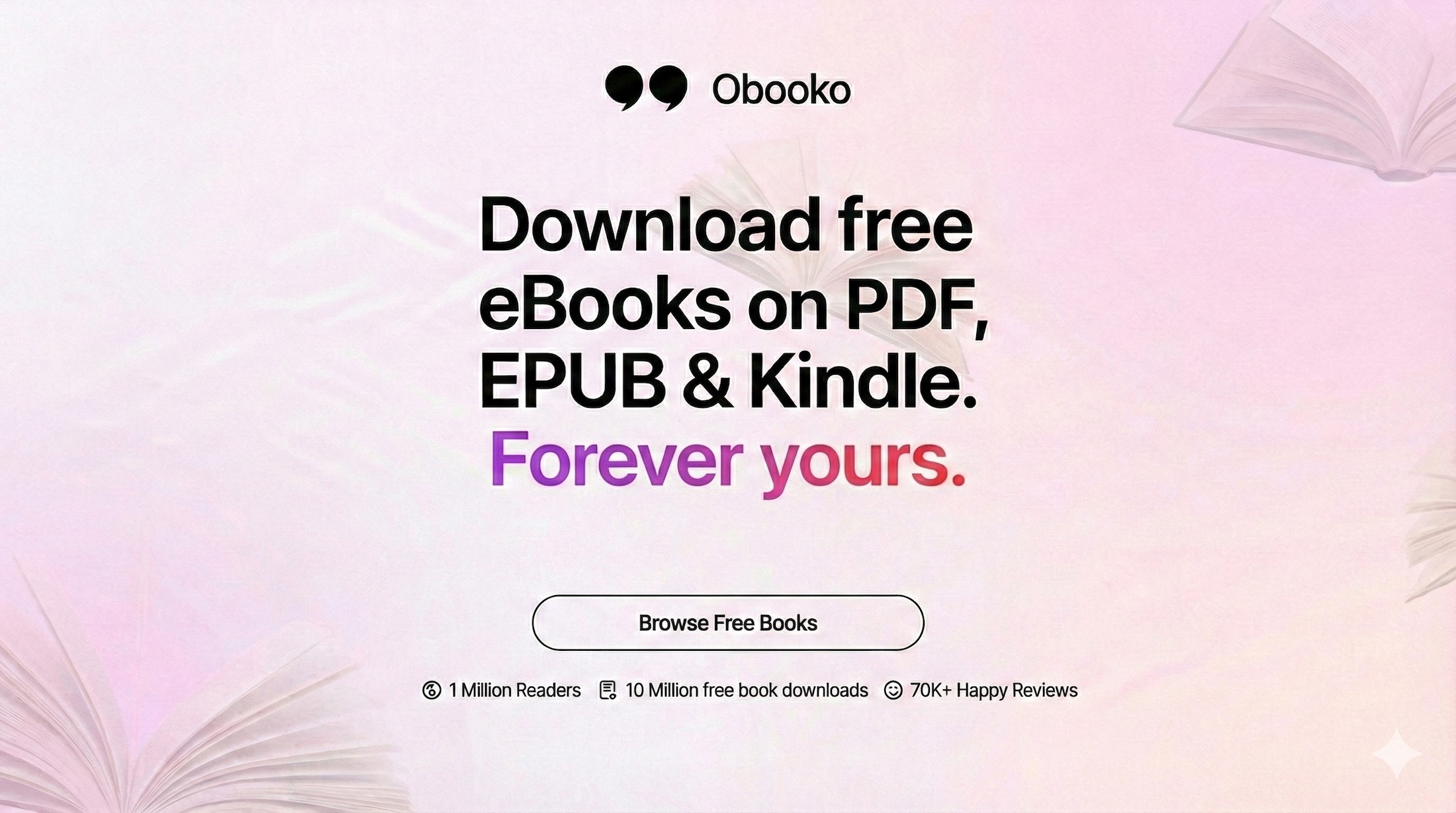
Books on Obooko are available in three formats: PDF, EPUB, and Kindle. Downloads are served directly from Obooko's own servers, which means there are no third-party mirrors, no redirect chains, and no pop-up ads blocking your download. In our testing at Icon Polls, the download process was smooth and fast. You click, and you get your file. No nonsense.
The PDF format is good for fixed-layout reading and printing. EPUB works best for e-readers and reading apps that support reflowable text. Kindle format covers Amazon device users. Having all three available for most books is a nice touch and gives readers flexibility. The files are clean too. No embedded ads, no affiliate links inside the books, and every file is scanned for viruses and malware before it goes live.
Login and Account
You can browse Obooko and look at book listings without creating an account. But to actually download books and build a personal library, you need to register. The sign-up is straightforward: email, first name, and a password. That is it. No credit card, no phone verification, no complicated onboarding flow.
Obooko requires registration partly because of COPPA compliance. Some books on the platform are intended for mature readers (17+), so the site needs to verify that users are at least 13 years old. Once you are in, you get access to unlimited free downloads, a personal library that syncs across devices, and the ability to leave ratings and feedback for authors.
The login process itself is simple. No two-factor authentication, no social login options like Google or Apple sign-in as of our review period. It works, but it is basic. Icon Polls would like to see social login options added for convenience, but it is not a dealbreaker.
User Experience
The 2025 rebuild made a noticeable difference. The old Obooko site, which had been running since 2010, was showing its age. The new version is cleaner, faster, and more intuitive. Genre browsing is well organized. Book pages show clear descriptions, reader ratings, and direct download buttons for each format. There is also a built-in online reader, called the Obooko Reader, that lets you read books directly in your browser without downloading anything.
Cross-device syncing is a welcome feature. You can start reading on your laptop and pick up where you left off on your phone. Your library, progress, and saved books all travel with you. For a free platform, that is a solid setup.
That said, the experience is not perfect. Navigation can feel a bit flat at times. There is no dark mode in the browser reader, which is a miss for readers who prefer reading at night. The search functionality works but could be smarter. Filtering options are limited compared to more established platforms. It is clear that the team has put effort into the redesign, but there is still room to grow.
AI Integration
This is where Obooko falls noticeably short in 2026. The platform does not offer any meaningful AI features. There is no AI-powered recommendation engine that learns your reading habits. There is no chatbot to help you find books based on mood or interest. There are no AI-generated book summaries or smart search capabilities.
In a year where almost every digital platform is integrating some form of artificial intelligence, Obooko's complete absence of AI feels like a missed opportunity. Even basic AI-driven book suggestions based on your reading history would improve the discovery experience significantly. Right now, finding new books depends on manual browsing, staff picks, and genre categories. It works, but it is the old way of doing things.
Icon Polls scored Obooko at 2.5 out of 5 for AI integration, which is the lowest category score in this review. If the team wants to compete with larger reading platforms, this is the area that needs the most attention.
App and Mobile Experience
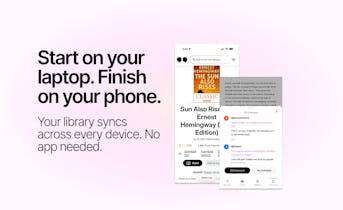
Obooko does not have a dedicated mobile app as of August 2026. There is no Obooko app on the Apple App Store or Google Play Store. The platform relies entirely on its mobile-responsive website to serve readers on phones and tablets.
To be fair, the mobile web experience is decent. Pages load quickly, the layout adjusts to smaller screens, and the Obooko Reader works on mobile browsers. You can read and download books from your phone without major issues. But it is not the same as having a native app with offline reading, push notifications, and a smoother overall feel.
For casual readers who do not mind using a browser, it is fine. For heavy readers who want a proper mobile reading app, the lack of a dedicated app is a real gap. This is one of the main reasons Icon Polls gave the mobile experience a 3.2 out of 5.
Icon Polls Rating Breakdown
|
Book Library |
3.5 / 5 |
|
User Experience |
3.8 / 5 |
|
Download Process |
4.0 / 5 |
|
AI Integration |
2.5 / 5 |
|
Mobile Experience |
3.2 / 5 |
|
Author Support |
4.2 / 5 |
|
Overall Rating |
3.7 / 5 |
Obooko earns a 3.7 out of 5 from Icon Polls. It is a solid free reading platform with a clean download process, a legal and ethical approach to book distribution, and a growing library of contemporary titles. The 2025 rebuild brought it up to date in terms of design and usability. But the lack of a mobile app and the absence of any AI features hold it back from scoring higher. It is a good platform, not a great one yet. With some investment in AI-driven discovery and a proper mobile app, Obooko could easily move into the 4.0+ range.
Frequently Asked Questions About Obooko
1. Is Obooko really free to use?
Yes. Obooko is completely free for readers. There are no subscription fees, no hidden charges, and no paywalls. The platform makes money through advertising, and a portion of that revenue is shared with the authors. You can create a free account and start downloading or reading books in your browser without ever pulling out your credit card.
2. Is Obooko legal and safe?
Obooko is a legal platform. Every book on the site is distributed with the written permission of the author or publisher, in compliance with US, UK, and international copyright law. The files are also scanned for viruses and malware before being made available for download. You will not encounter bundled software or sketchy redirects when downloading from Obooko.
3. Does Obooko have a mobile app?
As of 2026, Obooko does not have a dedicated mobile app for iOS or Android. The platform is entirely browser-based. However, the website has been rebuilt with a responsive design, meaning it works well on phones and tablets. You can read directly in the browser and your progress syncs across devices. It works, but it is not the same as having a proper app with offline support and push notifications.
4. Does Obooko use AI?
Obooko does not currently market itself as an AI-powered platform. There is no AI chatbot, no AI-generated book summaries, and no advanced AI-driven recommendation engine on the site. The platform does offer basic genre browsing, staff picks, and reader ratings to help users find books, but it has not embraced AI tools the way some larger competitors have. This is one area where Icon Polls feels Obooko could improve in the future.
5. What book formats does Obooko support?
Obooko offers books in three formats: PDF, EPUB, and Kindle (MOBI). PDF files work on nearly any device. EPUB is ideal for most e-readers and reading apps. Kindle format works with Amazon devices and the Kindle app. You can also skip the download entirely and read books online using the built-in Obooko Reader in your web browser.
6. Do I need to create an account to download books from Obooko?
You can browse the site and preview some content without an account. However, to download books and access your personal library, you will need to register. The sign-up process is simple and free. Obooko requires registration partly to verify that users are at least 13 years old, in compliance with COPPA regulations, since some books on the platform are intended for mature readers.
7. Can authors publish on Obooko for free?
Yes. Obooko allows authors to publish their books on the platform at no cost. Authors retain full rights to their work and can upload, update, or remove their books at any time. There are no exclusivity requirements or lock-in contracts. The platform also offers revenue sharing from advertising income, so authors can earn from their books even though readers access them for free.
8. How does Obooko compare to Project Gutenberg or Open Library?
The key difference is content focus. Project Gutenberg and Open Library lean heavily toward public domain classics and older works. Obooko is different because nearly all of its catalogue is contemporary fiction and non-fiction from independent and emerging authors. If you are looking for modern, original writing that you will not find on the classics-focused platforms, Obooko fills that gap well. The trade-off is that Obooko has a much smaller library overall compared to those larger platforms.
9. Is Obooko available outside the UK?
Yes. Obooko is available globally. Anyone with an internet connection can access the platform, create an account, and download books. However, the platform only distributes English-language books. It does not offer translations or books in other languages.
10. Who owns Obooko now?
Obooko was founded in 2010 by Tony Stanton. In 2025, a new owner named George took over the platform and led a complete rebuild of the website and reading experience. The company is registered as OBOOKO LIMITED in England. George has described himself as a UX designer, entrepreneur, and lifelong reader, and has spoken publicly about his vision to grow the platform into a modern reading destination.