There are a lot of sleep apps out there, and honestly, most of them feel the same. You track your sleep, look at a graph in the morning, feel vaguely guilty about your screen time, and close the app until the next day. Remy AI is a bit different from that, and after spending time with it and going through what users have been saying in 2026, we think it is worth your attention.
We also know that people searching for Remy AI in 2026 are sometimes looking for something else entirely, because Google has a separate project also called Remy, an internal AI agent built into Gemini. We cover both in this review so you are not left confused about which one is which.
Remy AI App Overview
Remy AI is a sleep and health coaching app developed by a company called Sleepy Coach, Inc. It is available on iOS through the Apple App Store and positions itself not as a tracker but as a full coaching experience backed by sleep science and behavioral research.
When you open the app, the first thing you notice is that it does not dump you into a dashboard full of numbers. Instead, it introduces you to Sleepy, an interactive AI character who acts as your personal sleep guide. That might sound a bit gimmicky, but most users say it actually helps. Having something in the app that feels conversational makes it less like a chore and more like checking in with someone who has a stake in how well you slept.
The core of the app is built around circadian rhythm tracking. Rather than just showing you how long you slept, Remy AI works out your body clock, tells you when your alertness is likely to peak and dip, and gives you practical recommendations around that. Things like the best time to have coffee, when to take a short nap, and when to start winding down in the evening.
There is also a growing library of sleep sounds, breathing exercises, and evening routine programs built into the app. Newer updates have added yearly and custom time range options for AI analysis, which lets you look at your sleep patterns over much longer periods and spot trends that you would never notice from looking at a week at a time.
Is There a Remy AI Robot?
This is a question we have seen pop up a fair amount, and the short answer is no. Remy AI is purely a software application. There is no physical robot product associated with the Remy AI sleep coaching brand.
The confusion likely comes from a few places. The name Remy has associations with AI characters and animated robots in popular culture, and there are separate sleep robot products on the market from other companies. Remy AI the app has nothing to do with any of those. If you are looking for a physical sleep aid device, that is a different product category entirely.
What Remy AI does have is a charming AI character within the app called Sleepy, who guides you through the coaching experience. That is as close to a robot companion as the app gets, and from what users say, it is engaging enough to keep people coming back.
Remy AI Sleep Features
This is where the app does its most interesting work. The sleep tracking side of Remy AI is built to go well beyond what a basic fitness tracker gives you. Here is a breakdown of what it actually does.
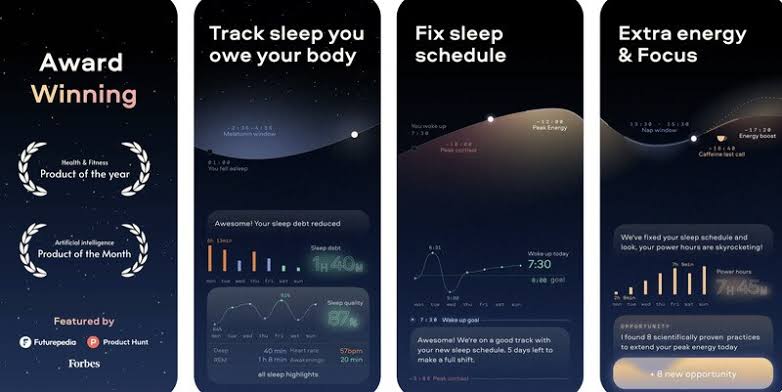
Circadian rhythm analysis is the standout feature. Remy AI calculates your personal circadian phase throughout the day and updates it as you check in. This is not just a generic schedule, it adjusts based on your actual sleep and wake data. The app will tell you that right now your alertness is dropping and a 20-minute nap before 3pm would help, or that drinking coffee after 2pm on a day like today will likely affect your sleep onset later that night. That kind of timing-specific advice is genuinely useful.
The Sleep Regularity Index is another feature added in recent updates. This is a proper scientific metric, the same one used in peer-reviewed research, that measures how consistent your sleep schedule is day over day. A high SRI correlates strongly with better health outcomes, and having it tracked inside the app gives you a meaningful target to improve against.
Daily sleep reports pull in data from your wearable, if you have one, and turn it into readable visual charts. Users consistently say the charts make it much easier to spot patterns, like realising that late-night phone use really does delay your sleep onset, or that your deep sleep drops sharply on days when you did not exercise.
The app also includes evening routine programs, yoga nidra sessions, breathing practices, and a sleep sound library that has been expanded in recent app updates. These are the kind of tools that help you actually do something with the insights you are getting, rather than just looking at data and feeling stuck.
According to the app's own figures, 81 percent of users report improved sleep within the first two weeks of use. That is a strong claim, and the user reviews we have come across broadly support the idea that people notice real improvements fairly quickly.
Google Remy AI: What Is It?
If you have been searching for Remy AI and coming across results about Google, here is the explanation. Google is internally developing a completely separate product also called Remy, and news about it started surfacing in May 2026.
Google's Remy is an AI personal agent built into a staff-only version of the Gemini app. It is being tested by Google employees and is designed to work as a 24/7 assistant that goes well beyond what a regular AI chatbot can do. The early details suggest it can communicate with other people on your behalf, share documents, handle complex scheduling tasks, and even make purchases. It learns your preferences over time and takes proactive action rather than waiting for you to prompt it.
Think of it as Google's answer to the growing interest in true AI agents rather than AI assistants. The difference between an assistant and an agent is roughly this: an assistant responds to what you ask; an agent observes, learns, and acts without always being prompted. Google's Remy is clearly being built with that agent model in mind.
This is still an internal project as of mid-2026. There is no confirmed public release date. But the existence of the project and the features being described suggest it could be a significant product when it eventually launches publicly.
To be absolutely clear: Google's Remy and the Remy AI sleep coaching app are two completely different products with no connection to each other.
Remy AI User Experience
Honestly, this is where things get interesting. The user experience for Remy AI is generally quite good, but it is not perfect, and the people who have spent serious time with the app are usually pretty clear about both sides.
The positives that come up most often are the tone of the app and how it handles the coaching relationship. People say it does not feel preachy or clinical. The AI character keeps things friendly and the recommendations are framed as suggestions rather than demands. That matters a lot in a wellness app, because nobody wants to feel told off by their phone for going to bed late.
The visual design is clean and the charts are well done. One thing users mention specifically is how much easier it is to engage with their sleep data when it is displayed in a way that actually makes sense. The app has put real thought into making data readable rather than just technically complete.
Personalisation is another strength. The app adapts to unusual schedules. If you work odd hours or your routine varies a lot week to week, Remy AI adjusts rather than applying a generic 11pm bedtime recommendation to everyone.
On the downside, new users sometimes find the interface a bit overwhelming at first. There is a lot going on and the feature set is broad enough that it takes a few days to understand where everything lives. Some users also note that early recommendations can feel a bit basic before the app has enough of your data to work with. This is understandable but worth knowing going in.
Notifications can also become a lot if you do not customise them early on. A few users mention turning several of them off to avoid notification fatigue while still getting the useful check-ins.
Overall, the user experience scores well with us. The app is clearly built by people who have thought hard about the psychology of sleep improvement, not just the data collection side of it.
Icon Polls Rating Breakdown
|
App Design and Usability |
4.0 / 5 |
|
Sleep Coaching Features |
4.0 / 5 |
|
Personalization |
4.0 / 5 |
|
Google / AI Integration |
4.0 / 5 |
|
Value for Money |
4.0 / 5 |
|
Overall Icon Polls Rating |
4.0 / 5 |
Pros and Cons
Pros: Science-backed sleep coaching built around circadian rhythms. Free tier available. Works with Apple Watch and wearables. Friendly AI coaching character keeps users engaged. Strong visual data presentation. Personalised to your actual schedule. Sleep Regularity Index tracking. Expanding sound and practice library.
Cons: Primarily iOS only as of 2026. Early recommendations can feel basic before enough data is collected. Interface takes a few days to fully get to grips with. Notifications need manual customisation to avoid becoming overwhelming.
Frequently Asked Questions About Remy AI

Popular Articles
-
 Luiz Felipe in 2026: Net Worth and Salary, Wife, Date Joined, Stats, Transfer Values, and FAQs
-
 Abdul Mumin in 2026: Net Worth and Salary, Wife, Nationality, Stats, Transfer Values, and FAQs
-
 David Møller Wolfe in 2026: Net Worth and Salary, Stats, Wife, Nationality, Transfer Values, and FAQs
-
 Matt Doherty in 2026: Net Worth and Salary, Wife, Date Joined, Stats, Transfer Values, and FAQs