If you have been paying attention to the AI developer tools space in 2025 and 2026, you have probably come across Tessl at some point. Whether it popped up in a conversation about spec driven development, showed up in your GitHub feed, or came across your LinkedIn timeline through its founder Guy Podjarny, Tessl has been making noise. But the big question is: does it actually deliver? Our team at Icon Polls spent time digging into the platform, testing features, reading through documentation, and looking at what real users are saying. This is our honest review of Tessl in 2026.
Tessl Company Profile
|
Company Name |
Tessl (Tessl AI Limited) |
|
Founded |
2024 |
|
Headquarters |
London, United Kingdom |
|
Founder and CEO |
Guy Podjarny |
|
Industry |
AI Software Development / Developer Tools |
|
Company Type |
Private (Series A) |
|
Total Funding |
$125 Million |
|
Valuation |
Approximately $750 Million (as of late 2024) |
|
Key Investors |
Index Ventures, Accel, GV (Google Ventures), Boldstart Ventures |
|
Employee Count |
Approximately 59 (as of mid 2026) |
|
Website |
tessl.io |
|
GitHub |
github.com/tesslio (22 public repositories) |
|
|
Tessl AI Limited |
|
Core Product |
Agent Enablement Platform, Spec Driven Development |
|
Registration |
Free plan available; email registration required |
|
Company Number (UK) |
15532364 |
|
Icon Polls Rating |
3.2 out of 5 |
AI
At its core, Tessl is built around AI. The whole idea behind the company is that AI should handle the code writing and maintenance parts of software development while humans focus on expressing what they actually want built. Tessl calls this AI native development, and it is the philosophy that drives everything they do.
The platform uses large language models to generate code from specifications that developers write. Instead of spending hours writing code line by line, developers write a detailed spec describing what the software should do, and Tessl's AI takes care of the rest. The AI can generate code across different programming languages and platforms, and it can also adapt when dependencies change or updates are needed.
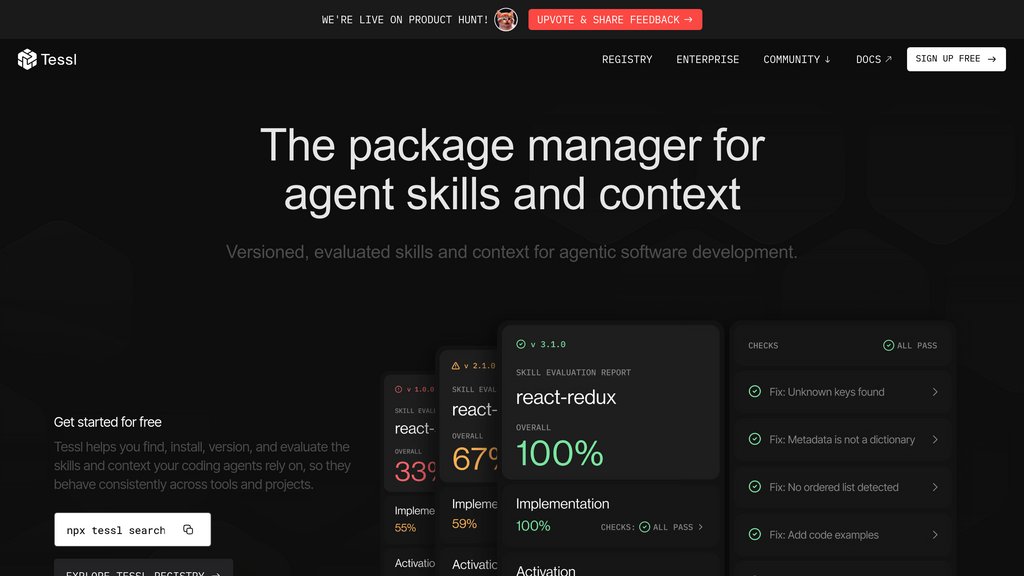
In January 2026, Tessl shifted its positioning and started calling itself an Agent Enablement Platform. This basically means they pivoted from being purely about spec driven code generation to focusing on giving AI coding agents the context they need to work properly. They introduced something called Skills on Tessl, which works like a package manager for agent skills. Think of it as a way to teach your AI coding agent how to use specific libraries, follow certain coding standards, and stick to your team's rules. From our testing at Icon Polls, the AI capabilities are solid in concept. When specs are written well and the context is clear, the outputs are impressive. But when things get vague or the project is complex, the AI still struggles with reliability. This is not unique to Tessl, but it is worth noting.
Registration
Getting started with Tessl is straightforward enough. You need to register on their platform at tessl.io with a valid email address. According to their terms of service, each user must be a human, must be 13 years or older, and needs to provide a valid email. They offer a free plan with limited features and usage, as well as professional plans with enhanced features for teams that need more.
Once registered, you can connect your GitHub or GitLab repositories to the platform. The setup process involves installing the Tessl CLI (command line interface) and configuring it with an API token from your workspace. For individual developers just exploring the tool, the free plan is enough to get a feel for things. For teams looking to roll it out across multiple repos, you will likely need a paid plan. The registration process itself is clean and takes just a few minutes, which is a plus.
Funding
Tessl's funding story is one of the more impressive ones in the AI developer tools space. The company raised a total of $125 million across two rounds. The first was a $25 million seed round led by Boldstart Ventures and GV (Google Ventures), which happened in April 2024. That was followed by a $100 million Series A round led by Index Ventures, with participation from Accel, GV, and Boldstart again. This Series A round, announced in November 2024, reportedly valued the company at around $750 million.
That is a massive valuation for a company that was barely a year old at the time. But the money tells us something about investor confidence, especially given that the founder is Guy Podjarny, who previously built Snyk into an $8 billion developer security company. Podjarny also served as CTO at Akamai after selling his first startup Blaze to them. The funding has been used to build out the platform, hire across AI research, engineering, product design, and developer relations. As of mid 2026, the company has around 59 employees. Icon Polls notes that while the funding is impressive, the company still has a lot to prove in terms of turning that capital into a product that developers actually adopt at scale.
Spec
The spec is really at the heart of what Tessl does. In traditional software development, you write code and then maybe write documentation about it later. Tessl flips that around. You write a spec first, describing exactly what you want the software to do, and then the AI generates the code based on that spec.
Specs in Tessl are markdown files with YAML frontmatter. They include the name and description of the feature, the target files, and detailed specifications of behavior, including error handling and test references. The idea is that the spec becomes the source of truth for your project, not the code itself. When requirements change, you update the spec and the code gets regenerated accordingly.
This is a genuinely interesting approach, and when it works well, it feels like a real shift in how software gets built. But Icon Polls found that writing good specs is actually harder than it sounds. If your spec is too vague, the AI produces unreliable code. If your spec is too detailed, you might as well have just written the code yourself. Finding that sweet spot takes practice, and the learning curve is steeper than Tessl's marketing materials suggest.
SDD (Spec Driven Development)
SDD, or Spec Driven Development, is the methodology that Tessl has been championing since its early days. The concept is simple on the surface: instead of writing code first and documenting later, you write a formal specification first and derive everything else, including the code, tests, and documentation, from that spec.
Tessl has been a key voice in pushing SDD into the mainstream developer conversation alongside tools like GitHub Spec Kit and AWS Kiro. They offer an installable tile on their platform called spec driven development that essentially teaches your AI coding agent to follow the SDD workflow. When installed, it changes how the agent approaches tasks. Instead of jumping straight into code, the agent asks clarifying questions, writes a spec, waits for your approval, and only then implements the code.
The SDD approach has its strengths. It forces you to think clearly about what you are building before any code is written. It creates a paper trail of intent that is useful for teams. And it makes AI generated code more predictable. But the criticism is also fair. Some developers have pointed out that large upfront specs can start to feel like a return to waterfall methodology. For small changes, like a simple null check, having to amend a full spec document can feel like using a sledgehammer to crack a nut. These are valid concerns, and they are part of why Icon Polls settled on a 3.2 rating for Tessl overall.
GitHub
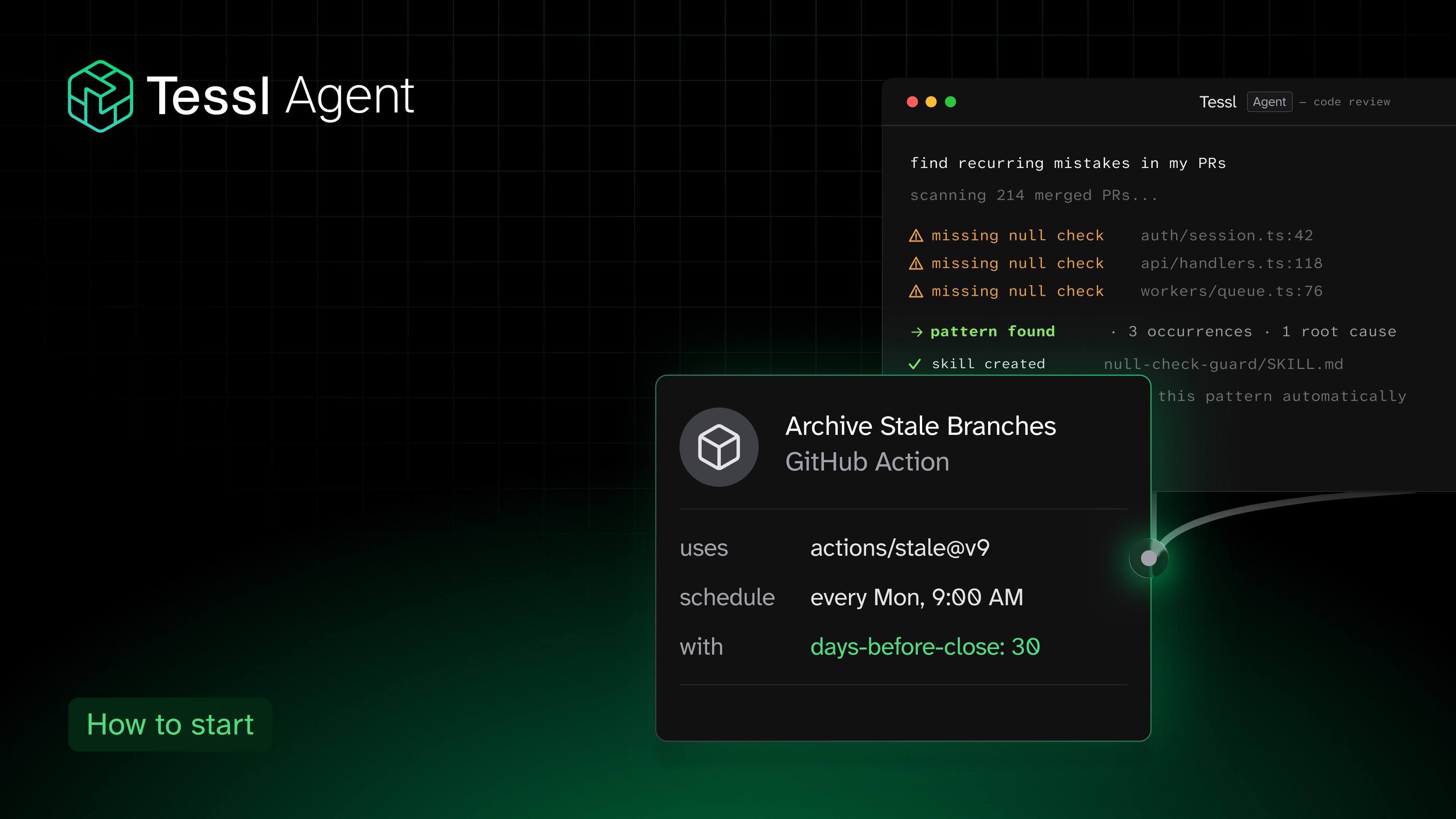
Tessl has a solid presence on GitHub under the organization name tesslio. As of August 2026, they have 22 public repositories. These include the main CLI tool, a GitHub Action for code reviews, a Homebrew tap for easy installation, the spec driven development tile, setup actions, and various plugins.
The CLI repository is the main one developers interact with. It currently has around 40 stars, which is relatively modest for a company with $125 million in funding. The code review action lets you run Tessl code reviews directly in your GitHub Actions pipeline and publish native pull request reviews, which is a nice integration for teams already using GitHub workflows. Tessl also connects directly to GitHub and GitLab, allowing you to initialize repositories and roll out shared guidance like coding standards and agent instructions across your codebase through pull requests. Everything ships as a PR that you review and merge, so nothing gets pushed to your code without your approval. That said, the open source community around Tessl is still small. The GitHub topic page for tessl shows some community projects, including a hackathon project from a Tessl and Anthropic collaboration, but overall the ecosystem is still in its early stages.
Tessl has a presence on LinkedIn, primarily through its founder Guy Podjarny, who is quite active on the platform. Podjarny regularly shares updates about Tessl's product launches, thought leadership on AI native development, and announcements about new features like task evals for software skills.
The company itself posts about product updates, hiring opportunities, and industry insights. In 2025, Tessl was ranked number 2 in Sifted EU's B2B SaaS Rising 100 and number 20 in Sifted's AI 100, which gave them some additional visibility on the platform. Job postings on LinkedIn and through investors like Index Ventures show that the company is actively hiring across engineering, product, and design roles. For anyone considering joining or working with Tessl, LinkedIn is a good place to get a sense of the company culture and the kind of people they are bringing on board.
User Experience
This is where things get mixed. For developers who are already comfortable with command line tools, the Tessl CLI is fairly intuitive. You install it, authenticate with your token, and start installing tiles and skills. The documentation on docs.tessl.io is generally well organized and covers the key workflows.
The platform integrates with popular AI coding agents like Claude Code and Cursor, which means you do not have to abandon your existing workflow to use Tessl. You install a tile, and your agent picks up the context automatically. No special commands or annotations needed.
However, the user experience falls short in a few areas. The onboarding could be smoother for developers who are not already familiar with the spec driven development concept. The free plan is limited enough that it is hard to get a real sense of the platform's value without upgrading. And while the documentation is decent, some areas feel incomplete, especially around the newer skills and agent enablement features that were introduced in early 2026. The web UI exists but feels secondary to the CLI experience, which could be a barrier for less technical users or managers who want to oversee what their team is doing. Overall, the user experience is functional but not polished. It feels like a platform built by engineers for engineers, which is fine for the target audience but limits broader adoption.
Icon Polls Rating: 3.2 out of 5
After thorough testing and research, Icon Polls gives Tessl a rating of 3.2 out of 5 for 2026. The rating reflects a platform that has a genuinely interesting vision and strong technical foundations, backed by serious funding and a credible founder. But it also reflects a product that is still finding its footing after a notable pivot in early 2026, with a user experience that needs work and a community that is still growing.
The spec driven development approach is clever and has real potential, but it is not yet proven at scale. The agent enablement pivot shows strategic thinking, but the messaging around how all the pieces fit together is still a work in progress. For early adopters and teams already working with AI coding agents, Tessl is worth exploring. For everyone else, it might be worth watching from the sidelines for another six to twelve months before jumping in.
Frequently Asked Questions About Tessl
1. What is Tessl?
Tessl is an AI powered Agent Enablement Platform founded in 2024 by Guy Podjarny. It helps developers and teams manage AI coding agents by providing structured context, specs, and skills that guide how agents write and maintain code. The platform supports spec driven development (SDD) and integrates with tools like Claude Code, Cursor, GitHub, and GitLab.
2. Who founded Tessl?
Tessl was founded by Guy Podjarny, who previously founded Snyk, a developer security company valued at over $8 billion. Before Snyk, Podjarny served as CTO at Akamai after selling his first startup Blaze to them. He is based in London and is an active angel investor with stakes in over 25 startups.
3. How much funding has Tessl raised?
Tessl has raised a total of $125 million. This includes a $25 million seed round led by Boldstart Ventures and GV in April 2024, and a $100 million Series A round led by Index Ventures in November 2024. The Series A reportedly valued the company at approximately $750 million.
4. Is Tessl free to use?
Tessl offers a free plan with limited features and usage allowances. There are also professional plans with enhanced features for teams and organizations that need more. You can register on tessl.io with a valid email address to get started with the free plan.
5. What is Spec Driven Development (SDD)?
Spec Driven Development is a software methodology where a written specification serves as the primary source of truth for a project, rather than the code. Developers write detailed specs describing what the software should do, and AI agents generate the code based on those specs. Tessl has been one of the leading voices in popularizing this approach alongside GitHub Spec Kit and AWS Kiro.
6. Does Tessl integrate with GitHub?
Yes. Tessl connects directly to GitHub and GitLab. Their GitHub organization at github.com/tesslio has 22 public repositories including a CLI tool, GitHub Actions for code reviews, and various tiles and plugins. The platform can initialize repositories and roll out shared guidance across your codebase through standard pull requests.
7. What happened with Tessl's pivot in 2026?
In January 2026, Tessl shifted its positioning from a spec driven development platform to an Agent Enablement Platform. They introduced Skills on Tessl, described as a package manager for agent skills. This moved the focus from pure spec to code generation toward a broader mission of giving AI coding agents the context and governance they need. The earlier spec driven approach is still part of the platform but is now one piece of a larger offering.
8. How many employees does Tessl have?
As of mid 2026, Tessl has approximately 59 employees. The company is actively hiring across engineering, product, design, and developer relations roles. They are headquartered in London, United Kingdom, and were ranked number 2 in Sifted EU's B2B SaaS Rising 100 in 2025.
9. Is Tessl worth using in 2026?
Based on Icon Polls' review, Tessl earns a 3.2 out of 5 rating. It is a promising platform with strong funding and a credible founding team. The spec driven development approach is interesting and the agent enablement features show real potential. However, the platform is still maturing, the community is small, and the user experience needs improvement. It is worth exploring if you are already working with AI coding agents, but more casual developers may want to wait and watch how the platform develops over the next year.
10. How does Tessl compare to GitHub Copilot or Cursor?
Tessl is not a direct replacement for tools like GitHub Copilot or Cursor. Those are AI coding assistants that help you write code in real time. Tessl sits on top of those tools and provides them with better context and structure through specs and skills. You can use Tessl alongside Claude Code or Cursor to make your AI agents more reliable and consistent. Think of it as a governance and context layer rather than a code writing tool.