|
Brand Name |
Claude Marketplace (Claude Code Plugin Marketplace) |
|
Parent Company |
Anthropic |
|
Launch |
Public beta rolled out late 2025, expanded across 2026 |
|
Category |
AI developer tooling, plugin and skills marketplace |
|
Primary Users |
Developers using Claude Code, MCP integrators, AI tinkerers |
|
Official Marketplace |
claude-plugins-official (hosted on GitHub) |
|
Third-Party Marketplaces |
Community-run via GitHub, GitLab, Bitbucket, self-hosted Git, and direct URLs |
|
Install Method |
/plugin marketplace add and /plugin install commands inside Claude Code |
|
Content Types |
Skills, plugins, slash commands, MCP servers, agents, hooks |
|
Pricing |
Free to use the marketplace itself; some third-party plugins are paid |
|
Notable Integrations |
GitHub, GitLab, Figma, Airtable, Buildkite, Bright Data, and many more |
|
Known Issues (2026) |
Silent load failures, stale third-party marketplaces, private auth gaps, security concerns around hooks |
|
ICON POLLS Rating |
2.9 / 5 |
What is the Claude Marketplace?
The Claude Marketplace is the distribution system Anthropic built so developers can extend Claude Code with installable packages. The headline format is the plugin, which is a bundle that can contain one or more skills, MCP server configurations, slash commands, agents, and lifecycle hooks. A marketplace, in turn, is just a Git repository with a marketplace.json file that lists plugins.
The official registry is claude-plugins-official, hosted on GitHub and available by default in Claude Code. On top of that, anyone can publish a marketplace by pushing a properly structured repo to GitHub, GitLab, Bitbucket, or any URL that serves the right manifest. As of mid 2026, third-party registries like claudemarketplaces.com and tonsofskills.com list hundreds of plugins and thousands of skills.
Claude Skills: The Real Engine of the Marketplace
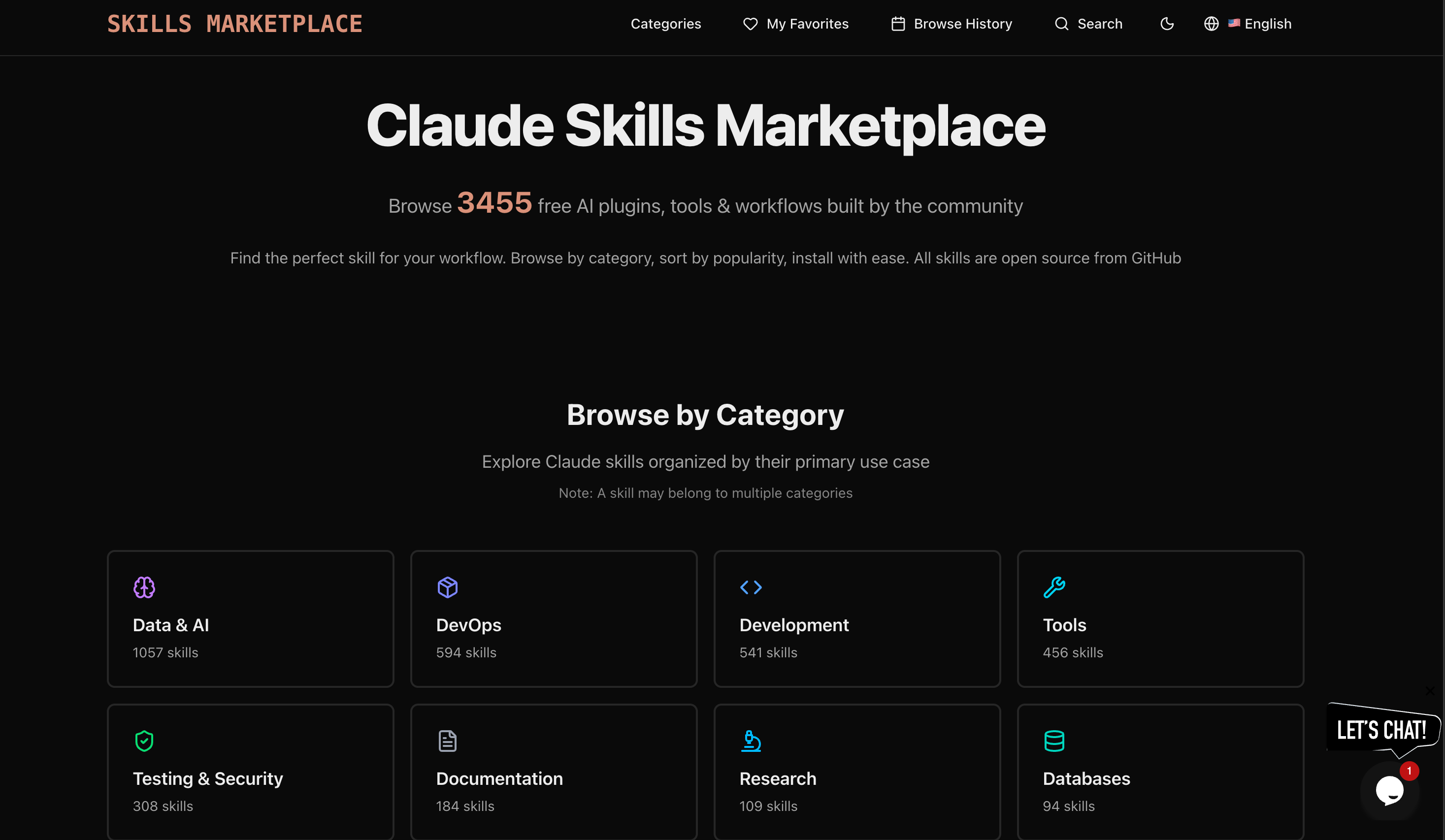
Skills are the unit of work in the Claude Marketplace. Each skill is essentially a folder with a SKILL.md file that teaches Claude how to handle a specific task, from creating Word documents to scraping websites, running optimization solvers, or managing a Spark cluster. The SKILL.md format has become an open standard that Claude Code, Codex CLI, and other AI coding tools have adopted, which is one of the better things to come out of the ecosystem this year.
Where it gets interesting is the sheer volume. SkillsMP advertises over 1.2 million skills sourced from public GitHub repos. The official marketplace ships polished skills for things like docx, pptx, xlsx, PDF handling, and frontend design. Community packs from people like Dan Avila, Seth Hobson, and Jeremy Longshore have added hundreds more, with the Longshore directory alone listing 2,810 skills and 200 agents at the time of this review.
The downside is quality control. Skills are not vetted before they appear in third-party registries. We installed several that were either outdated, broken, or vague to the point of being useless. ICON POLLS recommends sticking to skills from named publishers, repos with active maintainers, and the official marketplace when in doubt.
What Reddit Is Saying
Reddit threads about the Claude Marketplace in 2026 swing between excitement and frustration. The excitement usually comes from developers who have stitched together their own workflow using a handful of community plugins and feel like they are getting a private assistant for almost nothing. The frustration comes from a different group entirely.
Common complaints we kept seeing on r/ClaudeAI, r/LocalLLaMA, and r/programming threads include:
Aggressive throttling and unclear daily limits, particularly on the $20 Pro plan, which makes heavy plugin use risky.
Confusion about why a plugin works on a friend's setup but fails silently on theirs.
Anger at Anthropic for shipping the marketplace in beta and leaving long-running bugs unresolved.
Praise for specific power-user plugins like Claude Code Superpowers, claude-recall, and various LSP plugins.
There is also a recurring discussion about whether the marketplace was rushed. The general feeling is that Anthropic shipped the idea before the supporting infrastructure was solid. That tracks with what we saw.
GitHub: Where the Marketplace Actually Lives
Almost every part of the Claude Marketplace runs through GitHub in some shape or form. The official marketplace is a public GitHub repo. Most third-party marketplaces are GitHub repos. Even the issue tracker for marketplace bugs is on GitHub. This has good and bad effects.
On the good side, the openness means you can inspect any plugin or skill before you install it. You can read the SKILL.md, look at the hooks, and check the maintainer's history. PromptArmor and other security researchers have published detailed write-ups on how malicious plugins could exploit hooks to bypass human-in-the-loop protections, which is exactly the kind of accountability an open distribution system enables.
On the not-so-good side, GitHub is also where most of the unresolved bugs are sitting. Issues like custom marketplaces not auto-updating, plugins showing as enabled but failing to load skills, silent auth failures for private marketplaces, and the official marketplace occasionally refusing to load at all are all well-documented in the anthropics/claude-code repo. Anthropic has been responsive but slow, and many of these issues stayed open for weeks or months before any fix arrived.
Plugins: The Good, the Useful, and the Half-Baked
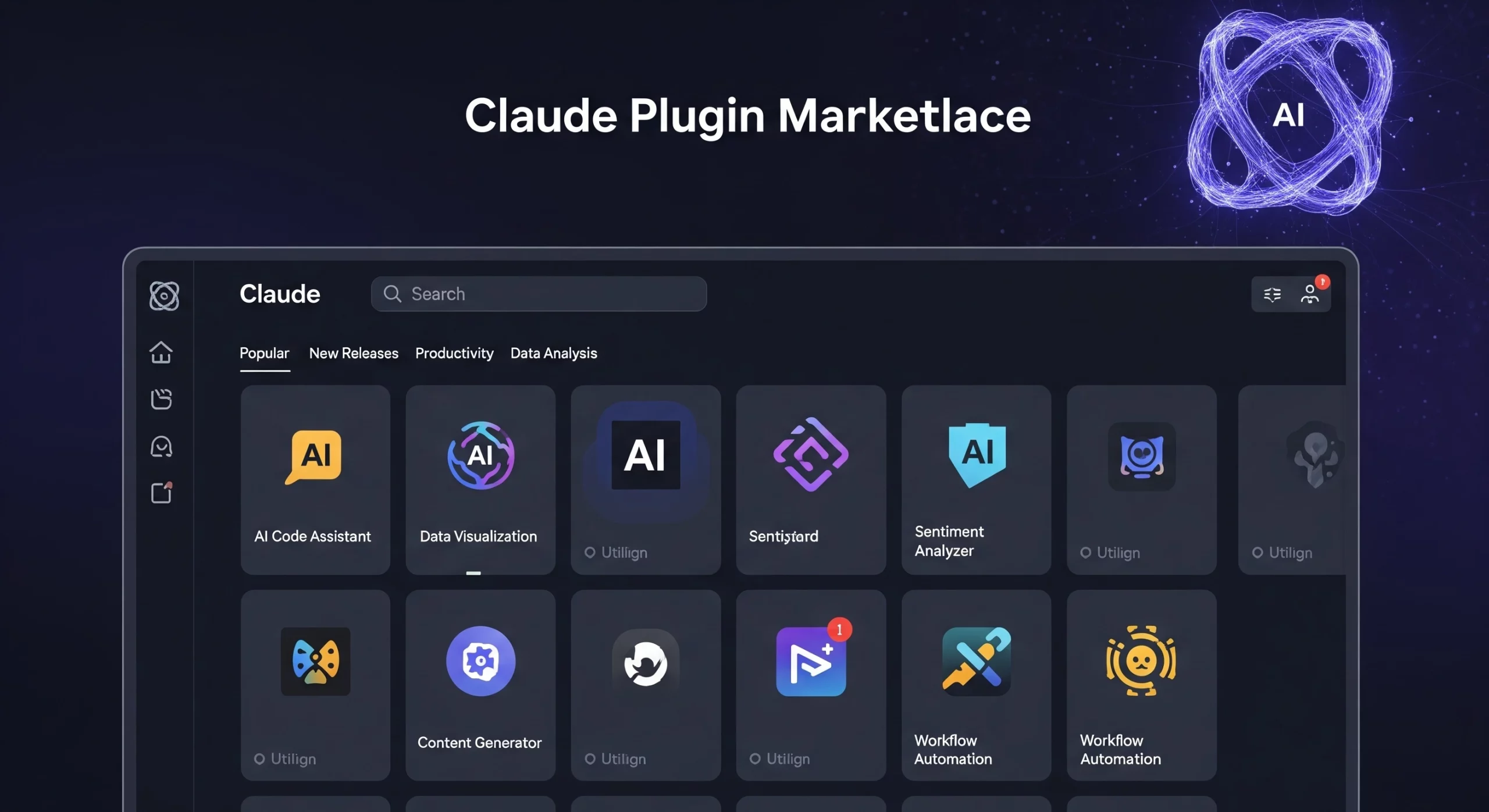
Plugins are where the marketplace either wins you over or makes you give up. A plugin is supposed to install with a single command, register its skills, and just work. In practice, results are uneven.
Plugins that genuinely impressed us
Official LSP plugins for TypeScript, Python, Rust, Go, Java, and others. These bring real diagnostics and code navigation into Claude Code without much fuss.
Bright Data, Airtable, and Buildkite plugins. These feel polished and well-documented, which is what you want from official partners.
Kobiton's mobile testing plugin and the GitLab integration plugin, both of which were highlighted as Killer Skills of the Week earlier in 2026.
Dan Avila's dev-utils-marketplace and Seth Hobson's sub-agent collection. Both are good examples of community work that takes itself seriously.
Where plugins fall apart
Many community plugins are abandoned within months of being published.
Installation can succeed while the actual skill files fail to mount, leaving Claude with no idea the plugin is even there.
In Cowork sessions, marketplace-installed plugins sometimes do not load skills properly while the same plugin uploaded as a zip works fine. This bug was logged in early 2026 and was still an irritation for many users at the time of writing.
Submitted plugins sometimes get marked as Published but never actually appear in the official marketplace directory, which the Anthropic team has been slow to explain.
GitLab: Supported, but with Real Friction
GitLab support exists in two senses. First, there is an official GitLab plugin in claude-plugins-official that connects Claude Code to your GitLab projects so you can browse repos, manage merge requests, monitor CI/CD pipelines, and update wikis. It uses an official MCP integration and works well once authenticated.
Second, you can host your own marketplace on GitLab. Claude Code accepts any Git URL, including GitLab and Bitbucket, as a marketplace source. This is in the docs and it works for public repos. The problem comes when your GitLab repo is private, which is the default for most enterprise teams.
There is an open feature request that has been sitting in the queue since late 2025 from a GitLab SaaS shop trying to distribute Claude Code augmentation to 200 plus developers. They cannot do it cleanly because Claude Code does not natively support auth on private marketplaces and plugins. Workarounds exist with LiteLLM and self-hosted proxies, but it is not what most teams want to be doing.
If you are an individual on a public GitLab repo, you are fine. If you are an enterprise team on private GitLab, expect friction.
User Experience: A Tale of Two Setups
The Claude Marketplace user experience splits cleanly into two paths. The first path is the happy path. You install Claude Code, run /plugin, browse the official marketplace, install a few plugins like Figma or GitHub, and everything works. For this user, the marketplace feels modern, fast, and surprisingly useful.
The second path is the messy one. You add a third-party marketplace, install a plugin, and notice that nothing is happening. Skills do not load. Commands do not appear. There is no error. You eventually find out, after some filesystem spelunking, that the marketplace clone went stale and Claude Code is not running git pull. Or your private repo's auth token expired and the failure happened silently. Or the plugin had a schema validation issue and broke the entire marketplace, not just that one plugin.
We hit both paths in our testing. The good moments were genuinely good. The bad moments were the kind that make you close the terminal and walk away.
Speed is another consideration. The terminal-based /plugin browser is fast and clean. The web-based plugin pages on claude.com are decent but sometimes lag behind the actual marketplace state, especially right after a publish.
Security Concerns Worth Knowing About
PromptArmor published a notable write-up in 2026 showing how a malicious plugin can bypass human-in-the-loop protections using hooks, then exfiltrate codebase files using indirect prompt injection. The attack chain depends on a user installing a malicious marketplace and plugin in the first place, which is more likely than you would think given how easy it is to discover third-party marketplaces.
Anthropic has added warnings on the official marketplace page reminding users that they do not control what MCP servers, scripts, or other software ship inside community plugins. That warning is appropriate. Treat any unknown plugin the way you would treat any random npm package or browser extension. Inspect first. Install second.
Pricing and Value
The marketplace itself is free. What costs money is Claude Code, which sits at $20 a month for Pro and $100 a month for Max plans in 2026, with usage limits that have been a source of ongoing community frustration. Some third-party plugins, particularly those tied to commercial services, have their own pricing on top. For most individual developers, the marketplace adds clear value to a Claude Code subscription. For teams, the picture is more mixed because of the auth and distribution gaps we covered above.
Frequently Asked Questions About the Claude Marketplace in 2026
1. Is the Claude Marketplace free to use?
Yes, the marketplace itself is free and ships by default with Claude Code. You still need a Claude Code subscription, which starts at around $20 a month for Pro and goes up to $100 a month for Max plans. A few third-party plugins are paid, but most community plugins are free.
2. How do I install a plugin from the Claude Marketplace?
Open Claude Code and run /plugin to launch the plugin browser. Pick a marketplace, find the plugin you want, and install it. For third-party marketplaces, first run /plugin marketplace add followed by the GitHub repo, GitLab URL, or local path, then install the plugin you need.
3. What is the difference between a skill, a plugin, and a marketplace?
A skill is a single instruction set in a SKILL.md file that teaches Claude how to do one specific task. A plugin is a bundle that can contain one or more skills along with optional MCP servers, slash commands, agents, and hooks. A marketplace is a Git repository that lists and distributes plugins.
4. Does the Claude Marketplace support GitLab?
Yes for public GitLab repositories, both as a marketplace source and through the official GitLab plugin. Support for private GitLab repos and authenticated marketplaces is limited and has been a long-running feature request from enterprise users.
5. Are Claude Marketplace plugins safe to install?
Official plugins from Anthropic and verified partners are generally safe. Community plugins should be treated like any open-source software you pull from the internet. Inspect the hooks, the MCP servers, and the SKILL.md before installing. Security researchers have shown that malicious plugins can bypass human-in-the-loop protections through hooks, so trust matters.
6. Why do my third-party plugins stop updating after install?
This is a known issue. Marketplace plugins installed from non-official sources do not always auto-update on session start. The fix is usually to navigate to the marketplace clone directory, run a manual git pull, and reload plugins. Anthropic has acknowledged the issue but a clean fix has been slow.
7. Can I publish my own plugin to the official Claude Marketplace?
Yes. Anthropic accepts submissions through the plugin submission page in Claude settings. Approval is not automatic, and several developers have reported their plugins being marked as Published without actually appearing in the marketplace directory. Expect some back and forth.
8. Where can I find a curated list of the best Claude Marketplace plugins?
Community-run directories like claudemarketplaces.com, tonsofskills.com, and skillsmp.com are the most useful starting points. They aggregate plugins and skills from across GitHub, apply basic quality filters, and update daily. The official marketplace is also a solid starting place for verified plugins.
9. Does the Claude Marketplace work outside Claude Code?
Plugins are designed for Claude Code, but the underlying SKILL.md format is an open standard that is also used by OpenAI Codex CLI and other AI coding tools. So while a full plugin will not run in those environments, the skills inside it often will.
10. What is ICON POLLS' overall rating for the Claude Marketplace in 2026?
ICON POLLS gives the Claude Marketplace 2.9 out of 5 for 2026. The score reflects strong potential, real value for individual developers, and clear pain points around reliability, security, and enterprise distribution that still need to be solved.