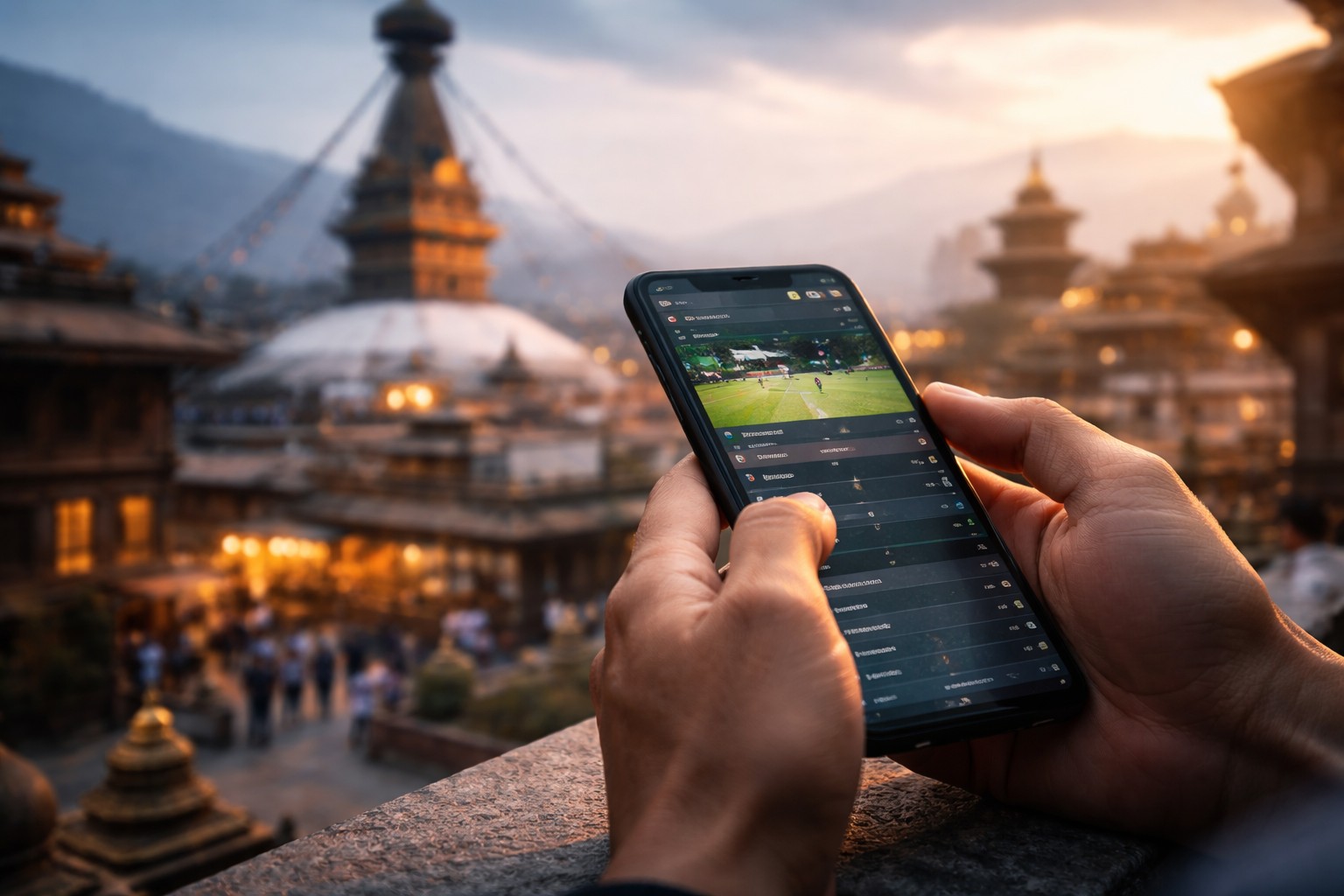
The handset, not the desktop, is setting Nepal’s digital routine in 2026. DataReportal’s latest country profile says Nepal had 32.4 million mobile connections in late 2025, 16.6 million internet users, and 14.8 million social media user identities, while the country’s population stood at 29.6 million, and 77 percent still lived outside urban centers. That combination produces a very specific habit: people do not wait for a long evening session at one screen, they check a feed on the bus, reopen a stream at tea, and jump back into clips, scores, or chat after a notification lands. Phones set the tempo.
The phone got there first
The infrastructure explains the behavior. Nepal Telecommunications Authority data in its MIS report for Baisakh 2082 listed 26,252,176 mobile broadband subscriptions and 29,384,526 total broadband subscriptions, while DataReportal’s 2026 profile put the median fixed download speed at 79.79 Mbps, up 11.4 percent year over year by August 2025. That mix favors products built for one thumb, weak-signal recovery, and short loading paths rather than ornate desktop journeys. A platform that opens cleanly after a dropped connection in Pokhara or Bhairahawa usually beats one with a prettier design and slower recovery.
The stream now follows the fan
Sports viewing has moved into the same pattern. The ICC said the Men’s T20 World Cup ran from February 7 to March 8, 2026, and that matches in Nepal were available on Kantipur TV, ICC.tv, and local digital platforms, with select games in Nepali and a Nepali commentary feed on ICC.tv for Nepal games. That is a sharp sign of where habit has gone: the match is no longer locked to one living-room schedule when the same event can sit on a television set, a phone app, and a clip feed at once. A viewer can watch the live ball, then leave the main stream for a score update, a replay, or a comment thread, and return before the next over starts.
The second screen is always open
That shift changes what people do during live sport. Once coverage exists across video, scorecard, highlights, and notifications simultaneously, the audience starts treating the phone as a control panel rather than a backup screen. The same habit helps explain why nepali betting sites sit naturally beside lineup pages, toss updates, and live score feeds. The attraction is not a mystery; it is timing: a price move after a wicket, a missed penalty, or a substitution at the 68th minute rewards the user who is already inside the match rather than the one who comes late via a desktop search.
Gaming stopped being a side room
Gaming in Nepal has followed the same path and become less separate from the rest of digital life. The Nepal Esports Association’s 5th Nepal Esports Championship & Expo 2025 used a hybrid format: qualifiers and double-elimination matches online until the semi-finals, then LAN finals, with titles including CS2, Dota 2, Mobile Legends Bang Bang, eFootball, and PUBG Mobile. That format says a lot on its own. Competitive play now begins in bedrooms, cafés, hostels, and on phones, then moves to a stage only at the end, which is why the line between casual play, streaming culture, and organized competition has become so thin as to disappear for much of the audience.
One app, one stream, one more check
This is where platform design starts to shape behavior rather than merely serve it. A fan watching Nepal on ICC.tv or checking a football team sheet before kickoff is already moving between live video, chat, and data, so the next tap usually goes to whichever interface loads fastest and asks the fewest questions. In that pattern, mel bet fits the same live-usage loop as any other real-time service, because sport on a phone now rewards quick menus, visible in-play markets, and short payment paths more than brand theater. The useful products are those built for the forty-second gap between deliveries, halftime, or a VAR review, when attention is brief, and the user expects the page to be ready before the moment passes.
The feed decides the next move
Personalization is finishing the job. DataReportal says Facebook’s potential reach in Nepal hit 14.8 million in late 2025, equal to 89.6 percent of the local internet user base, while Instagram reached 4.35 million users, or 26.3 percent of that same base. Nothing stays still. When discovery happens inside ranked feeds, story trays, highlight clips, and push alerts, the winning platform is the one that predicts the next tap accurately: a wicket clip after the live stream, a fantasy prompt after the lineup, a replay after a goal, a bracket after the esports match ends. Nepal’s online habit in 2026 is no longer built around logging on; it is built around returning, several times a day, to the screen that already knows what comes next.