Quick Verdict
Upstash in 2026 is the default serverless Redis choice for developers building on edge platforms like Cloudflare Workers and Vercel Edge Functions. A 3.2 rating reflects a genuinely useful tool for its specific niche with real limitations that emerge at scale. Upstash solved a real problem. Traditional Redis requires TCP connections, which serverless functions cannot maintain across invocations. Upstash provides a REST API that works everywhere. The per-request pricing at zero dollars twenty per one hundred thousand commands means you pay nothing when idle. For hobby projects and prototypes, Upstash is perfect. The free tier covers many small projects entirely. For production at scale, the economics change. At fifty million commands per month the bill becomes unpredictable. Upstash uses eventual consistency with a one to two second persistence window. During outages, you risk data loss. The HTTP API adds five to fifteen milliseconds latency compared to in-process Redis. For most serverless workloads these tradeoffs are acceptable. For mission-critical caching or high-throughput real-time systems, they are not. Upstash is correct for building new serverless applications. Migration from traditional Redis requires accepting architectural differences.
At a Glance: Icon Polls Ratings
Here's how Upstash scored across what we evaluated in 2026:
|
Category |
Stars |
Score |
|
Serverless and Edge Integration |
★★★★★ |
4.5/5 |
|
REST API Design |
★★★★☆ |
4/5 |
|
Pricing Model for Variable Workloads |
★★★★☆ |
4/5 |
|
Persistence and Reliability |
★★★☆☆ |
2.5/5 |
|
Console and Management |
★★★★☆ |
3.5/5 |
|
Documentation and Support |
★★★★☆ |
3.5/5 |
|
Scale Cost Economics |
★★★☆☆ |
2.5/5 |
|
Overall |
★★★☆☆ |
3.2/5 |
What Is Upstash?
Upstash is a serverless data platform founded in 2020 that makes Redis available for edge and serverless environments. Instead of traditional Redis that requires persistent TCP connections, Upstash exposes Redis commands through an HTTP REST API and charges per request instead of per hour. The platform serves developers building on Vercel Edge Functions, Cloudflare Workers, AWS Lambda, and other serverless runtimes where traditional Redis is awkward. Upstash offers Redis for caching and sessions, a vector database for AI embeddings, QStash for message queues, and Workflow for durable tasks. The company runs entirely on AWS across fourteen regions globally. Data replicates automatically across multiple regions for low-latency access from edge locations worldwide. The free tier includes five hundred thousand commands per month with two hundred fifty-six megabytes storage, enough for prototyping and many small projects.
Sign-up and Account Creation
Signing up for Upstash takes ninety seconds. You visit the website and click sign up. You can authenticate with GitHub or Google accounts, or create a new email address. Two-factor authentication is available. After verification, you are in the dashboard and can create your first database immediately. The onboarding guides you through naming your database, selecting a region, and choosing a plan. For free tier users, no payment information is required. You can start building right away. The entire process is smooth and friction-free. Within minutes of signing up you have a Redis database URL and auth token ready to use.
Login and Dashboard Access
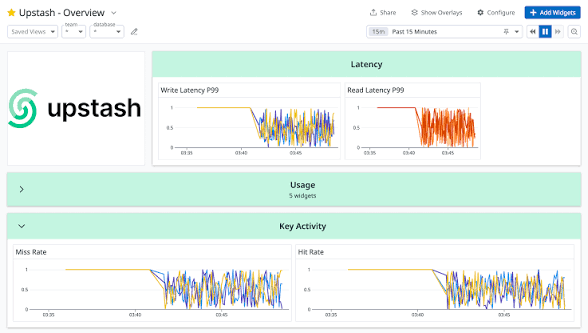
Logging into Upstash is straightforward. You enter your email and password or use GitHub or Google authentication. Two-factor authentication adds a second verification step if enabled. After login, you arrive at the dashboard which shows all your databases. The dashboard displays usage metrics, pricing information, and quick access to database credentials. Switching between databases is simple. Creating new databases takes one click. The login experience is smooth. Session management is reliable. You stay logged in across browser sessions unless you explicitly log out. The dashboard refresh is snappy and responsive.
Pricing and Plans
Upstash offers multiple pricing models to match different use cases. The free tier costs nothing and includes five hundred thousand commands per month with two hundred fifty-six megabytes storage. The pay-as-you-go model charges zero dollars twenty per one hundred thousand commands plus zero dollars twenty-five per gigabyte of storage. There are no monthly minimums. A command costs nothing if you do not execute it. Fixed plans start at ten dollars per month for two hundred fifty megabytes with unlimited commands. Higher tiers go up to one thousand five hundred dollars per month for five hundred gigabytes. The Prod Pack add-on costs two hundred dollars per month per database and adds an uptime SLA, multi-zone high availability, and SOC-2 compliance. Vector database pricing starts at sixty dollars per month. QStash message queue starts at one hundred eighty dollars per month.
|
Plan |
Price |
What You Get |
|
Free |
$0/month |
500K commands, 256 MB, ideal for prototyping and small projects. |
|
Pay-As-You-Go |
$0.20 per 100K commands |
No minimum, scale to zero, $0.25/GB storage. Best for variable workloads. |
|
Fixed |
$10-1500/month |
Predictable billing, unlimited commands, various storage tiers. For steady traffic. |
Is The Pricing Fair?
For variable and low-traffic workloads, yes. The free tier is genuinely useful. Pay-as-you-go removes provisioning overhead. For consistent high traffic, fixed plans become cost-effective. However, at fifty million commands per month you approach the cost of traditional Redis. For serverless specifically, Upstash pricing is competitive. For general-purpose Redis, traditional managed Redis becomes cheaper at scale. The Prod Pack at two hundred dollars per month is expensive for just adding SLA and SOC-2. Most users opt for standard plans without it.
Console and Database Management
The Upstash console is clean and functional. The main dashboard shows all your databases with status, usage, and cost. Clicking a database opens the detailed view where you can execute Redis commands directly in a command editor. The command editor shows real-time results. You can view your data, debug issues, and test commands. Configuration options let you set eviction policies, adjust regions, and add read replicas. The settings page shows connection strings for different clients. Database credentials are visible with copy-to-clipboard buttons. Backups can be manually triggered. Monitoring shows command throughput and storage usage over time. The console is responsive and works well. The interface is intuitive for managing databases. Advanced configuration requires understanding Redis concepts but the UI does not hide functionality behind modal dialogs.
REST API and Integration
Upstash's REST API is the core differentiator. Every Redis command is available over HTTP as a JSON POST request. The response returns the command result as JSON. This works in any environment that can make HTTP requests: Cloudflare Workers, Vercel Edge Functions, browsers, mobile apps, anywhere. The standard Redis client libraries also work via TCP if you prefer persistent connections. The TypeScript client library @upstash/redis handles authentication automatically. Integrations with Vercel, GitHub, and other platforms are one-click. The API documentation is comprehensive with examples in multiple languages. Rate limiting is generous. Response times are fast enough for most use cases. The HTTP overhead adds five to fifteen milliseconds compared to in-VPC Redis but this is acceptable for edge locations.
Persistence and Reliability
This is Upstash's biggest limitation. Upstash uses asynchronous persistence with an approximate one to two second persistence window. This means if the database crashes between persistence cycles, you lose up to two seconds of data. This is acceptable for caching. It is not acceptable for session storage or critical data. During regional outages, data in the persistence window can be lost. This has happened in production. For mission-critical systems, the Prod Pack adds multi-zone high availability which improves reliability. However, the eventual consistency model remains. Upstash is best used for data you can reconstruct, not data you cannot afford to lose.
Alternatives to Upstash
Redis Cloud is the official managed Redis service from the company that develops Redis. It offers higher reliability and full Redis module support. AWS ElastiCache Serverless removes provisioning overhead while maintaining traditional instance reliability. Momento is a newer competitor with transfer-based pricing and a generous free tier but is not Redis-compatible. Vercel KV is Upstash Redis rebranded with tighter Vercel integration but costs double per command. For edge computing, Cloudflare Durable Objects provides native Redis-like functionality with better consistency guarantees. For traditional server architectures, self-hosted Redis with cloud backups is cheaper at scale. Choose based on your deployment model and consistency requirements.
User Experience and Developer Workflow
Building with Upstash from serverless runtimes is smooth. The REST API works immediately after creating a database. The TypeScript client is lightweight and works in any JavaScript runtime. Documentation shows practical examples for common patterns: caching, rate limiting, session storage, real-time features. The learning curve is low if you understand Redis. If you are new to Redis, Upstash does not add complexity. The command editor in the console helps debug. Error messages are clear. The platform feels like it was designed by developers for developers. Integration with Vercel and Cloudflare is seamless. Scaling from hobby project to production feels natural. The main friction is accepting eventual consistency and planning for data loss in failure scenarios.
Pros and Cons
What Works Well
REST API works in any environment without TCP connections required
Per-request pricing with scale-to-zero is perfect for variable workloads
Free tier is generous enough for real prototyping and small projects
Global replication across fourteen regions with automatic latency optimization
Console is clean and functional with integrated command editor
TypeScript client library is lightweight and works in any JavaScript runtime
One-click integration with Vercel, Cloudflare, and other platforms
Documentation is practical with real-world code examples
Support is responsive for technical questions
Data replication is automatic with no configuration needed
What Needs Improvement
Eventual consistency with one to two second persistence window risks data loss
Per-request pricing becomes expensive at high throughput above fifty million per month
HTTP API adds five to fifteen milliseconds latency overhead
No full Redis module support, missing some advanced features
Prod Pack is expensive at two hundred dollars per month for SLA and SOC-2
No guaranteed uptime on standard plans
Migration from traditional Redis requires application changes
Not suitable for mission-critical systems requiring strong consistency
Frequently Asked Questions About Upstash (2026)

1. Is Upstash Redis truly serverless?
Yes, Upstash is serverless in the sense that you do not provision or manage servers. You pay per request and the service scales automatically. You do not pay a monthly minimum. However, data has an eventual consistency window where loss is possible.
2. Can I use Upstash from Cloudflare Workers?
Yes, this is one of Upstash's primary use cases. The REST API works perfectly from Workers where traditional Redis TCP connections are not available. The integration is zero-code.
3. How does Upstash compare to Redis Cloud?
Redis Cloud offers higher reliability and full module support but requires provisioning instances. Upstash is serverless and per-request. Choose Upstash for variable edge workloads. Choose Redis Cloud for consistent high throughput or when you need full Redis modules.
4. What happens if I exceed my free tier limit?
Your commands will fail with quota exceeded errors. You do not incur surprise bills. You can upgrade to pay-as-you-go anytime. The free tier gives you clear limits you can test against before committing.
5. Is Upstash data encrypted?
Yes, all data is encrypted in transit over HTTPS. Encryption at rest requires the Prod Pack add-on. Standard plans encrypt in transit but not at rest. For sensitive data, budget for Prod Pack.
6. Can I use Upstash for session storage?
Technically yes, but understand the data loss risk. Sessions can be reconstructed from client cookies or the database. If you cannot afford losing a few seconds of session data, Upstash is acceptable. If every session must be persistent, choose Redis Cloud.
7. What is the latency from my application to Upstash?
Latency depends on your location and Upstash's nearest region. From edge locations, expect five to fifteen milliseconds. From traditional servers, add region selection time. Upstash automatically routes to the nearest region for read replicas.
8. Can I migrate my data from Redis Cloud to Upstash?
Yes, you can export your data from Redis Cloud and import it to Upstash using RDB dumps or SCAN-based migration. Downtime depends on dataset size. Most migrations complete within minutes for typical datasets.
9. Does Upstash offer technical support?
Community support is available in Discord and the documentation is thorough. Paid plans include email support. The team is responsive to technical questions. For enterprise, custom SLA support is available but requires contacting sales.
10. Should I choose Upstash for my serverless application?
Choose Upstash if you are building on Cloudflare Workers or Vercel Edge and need caching or rate limiting. Accept the eventual consistency model and understand data loss risks. For mission-critical persistence, choose Redis Cloud or traditional databases. For edge computing, Upstash is usually the right choice.
Icon polls Verdict
Upstash earns a 3.2 out of 5. That rating reflects a genuinely useful platform for its intended use case with real limitations that matter at scale. Upstash is the best choice for building new serverless applications on edge platforms. The REST API works where traditional Redis cannot. The per-request pricing aligns with serverless economics. The free tier is genuinely generous. For prototyping and small-scale systems, Upstash is excellent.
The 3.2 is not higher because reliability concerns are real. Data loss during outages has happened. Eventual consistency is a fundamental limitation. At high throughput, pricing becomes unpredictable. These are not bugs but architectural decisions that make sense for some use cases and not others. For caching, rate limiting, and session storage where data loss is recoverable, these tradeoffs are acceptable. For critical systems where you cannot lose data, they are not.
The practical recommendation is to use Upstash for greenfield serverless projects. Understand the persistence window and plan accordingly. Start free and measure cost as you scale. If your bill exceeds what you would pay for fixed plans, migrate to traditional Redis. For most new serverless applications, Upstash will serve you well. Just do not treat it as a permanent database.