Ask anyone who has sat through an e-learning module made for African students and narrated by a flat mid-Atlantic voice, and you will hear the same complaint. The words are correct. The delivery is not. Vowels land in the wrong place, names get mangled, and the whole thing carries the faint condescension of content produced somewhere else for people who were not consulted.
For most of the past decade that was simply the state of the art. Speech synthesis was built on American and British English, and everything else was treated as a deviation. The consequences ran deeper than aesthetics. Assistive technology researchers have pointed out that when the voice a person depends on sounds foreign or robotic, the cost is not just clarity, it is identity and confidence.
2026 is the year that argument stopped being theoretical. Nigerian startups have shipped speech models trained on tens of thousands of African speakers. Governments have funded open-source language infrastructure. Global platforms have quietly filled out their voice libraries with Yoruba-inflected, Ghanaian and Kenyan English that no longer sounds like a costume. The ten platforms below represent the strongest options available now, ranked on how convincingly they handle African English rather than how loudly they advertise it.
At a Glance: The 2026 Field
|
# |
Platform |
Accent and language reach |
Why it stands out |
Best suited to |
Entry point |
|---|---|---|---|---|---|
|
1 |
ElevenLabs |
Nigerian, Yoruba-inflected, Ghanaian, Malawian and pan-African voices across a 10,000+ community library |
Expressive delivery plus ethical voice cloning, backed by an African accessibility programme |
Creators, audiobooks, brand narration |
Free tier, paid from about $5 |
|
2 |
Intron (Sahara v2) |
24 African languages including Pidgin, Hausa, Igbo, Yoruba, Swahili, Zulu, Twi |
Trained on 50,000 hours from 40,000+ African speakers, beats global models on accent benchmarks |
Health, government and enterprise deployments |
Enterprise API |
|
3 |
Spitch AI |
Yoruba, Hausa, Igbo, Amharic and African-accented English |
Developer-first APIs now available through the Cencori AI gateway |
Startups, call centres, product teams |
Usage-based API |
|
4 |
Microsoft Azure Neural TTS |
Dedicated en-NG, en-KE, en-ZA and en-TZ locales |
Stable, contract-ready voices with custom neural voice for brand builds |
Regulated industries and large-scale IVR |
Pay per character |
|
5 |
HeyGen |
175+ languages and dialects including Swahili, Afrikaans, Amharic, Somali |
Line-by-line control over stress and pacing, plus video in the same workspace |
Marketing, training and social video |
Free trial, paid tiers |
|
6 |
CAMB.AI |
150+ languages with emotion carried across the translation |
Broadcast-grade dubbing proven on IMAX, NASCAR and live sport |
Broadcasters, studios, sports rights holders |
Enterprise quote |
|
7 |
Awarri and N-ATLAS |
Yoruba, Hausa, Igbo, Pidgin and Nigerian-accented English |
State-backed, open-source and now the template for a five-country GSMA programme |
Public sector, research, civic tech |
Open-source access |
|
8 |
Lelapa AI |
South African languages and accented English |
Johannesburg built, backed by Jeff Dean and Mozilla Ventures |
Southern African customer service |
Tiered API |
|
9 |
Narakeet |
Nigerian and wider African English accents within 900 voices |
Turns slides and scripts into narrated video at low cost |
E-learning and school content |
Low-cost credits |
|
10 |
Easy-Peasy.AI |
Igbo, Yoruba, Lagos, pidgin and pan-African character voices |
Deep bench of community voices with genuine local texture |
Folktales, drama, indie storytelling |
Free tier available |
1. ElevenLabs
ElevenLabs holds the top position on breadth and expressiveness rather than on any single African-specific model. Its library pairs around 40 curated voices with more than 10,000 community-created ones, filterable by accent, age and use case, and the African English section is unusually rich: Nigerian male and female narrators with Yoruba and Igbo inflections, Malawian and pan-African voices tagged for storytelling, folktales and conversational reads. The delivery holds intonation and rhythm in a way that competitors still struggle to match on long-form narration.
What lifts it beyond a catalogue is what the company has been doing on the continent. Through its Impact Program with Senses Hub, a Nairobi-based accessibility research centre, ElevenLabs has been developing localised African voice models for augmentative communication systems, built on consent and ethical voice donation, and in March 2026 the company committed a billion dollars in free voice restoration technology for people living with permanent voice loss. Senses Hub has been explicit about the reasoning: most existing assistive voices were built on American and British models and sound nothing like the people using them in Nairobi or Lagos.
The caveats are real. Community voices vary in quality, some carry credit multipliers of two or three times, and professional clones can expire. Audition before you commit a series to one.
2. Intron and the Sahara v2 Model
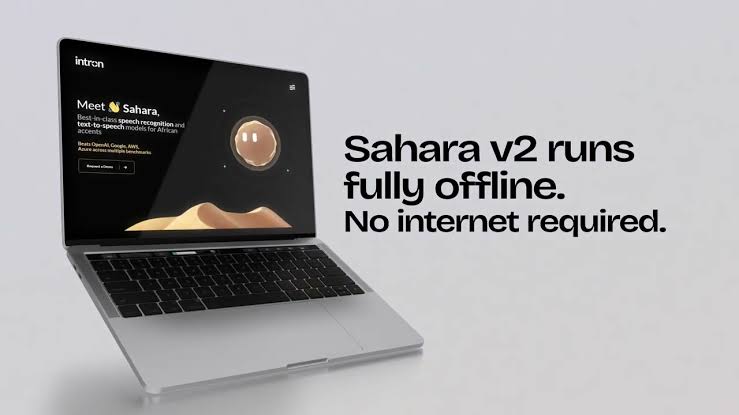
If ElevenLabs wins on library, Intron wins on evidence. The company launched the second generation of its Sahara model in March 2026 covering 24 African languages, among them Pidgin, Hausa, Igbo, Yoruba, Swahili, Zulu, Twi, Wolof, Amharic and Afrikaans. The training corpus is the headline: more than 14 million audio clips, roughly 50,000 hours, drawn from over 40,000 African speakers. On benchmarks measuring African names and accents, it outperforms leading global models.
That last detail matters more than it sounds. Anyone who has heard a global system stumble over Adebayo, Nyambura or Oluwaseun understands that accurate name pronunciation is not a nicety in health records, banking or public services. Intron also published its inaugural Africa Voice AI Report alongside the launch, a rare piece of continent-level documentation aimed at regulators and investors rather than marketers. Chief executive Tobi Olatunji framed the release around cultural and linguistic understanding as an engineering input rather than a slogan. This is infrastructure, so expect an enterprise conversation rather than a signup page.
3. Spitch AI
Spitch occupies the layer most people never see and most products need. Founder Temi Babs started the Lagos company after concluding that OpenAI Whisper was not well tuned to African voices, and rather than building a consumer app he built the missing plumbing: simple APIs and SDKs that let any team add local-language speech recognition and synthesis without machine learning expertise. It supports Yoruba, Hausa, Igbo, Amharic and English in both directions.
Its position strengthened considerably this year when Spitch models were integrated directly into the Cencori AI gateway, meaning developers can now reach African-language voice through the same API and tooling they already use for other providers. In practice that enables something ordinary but previously awkward: receiving a WhatsApp voice note in Yoruba, transcribing it, processing the text, and replying in a natural Yoruba voice inside one workflow.
4. Microsoft Azure Neural Text to Speech
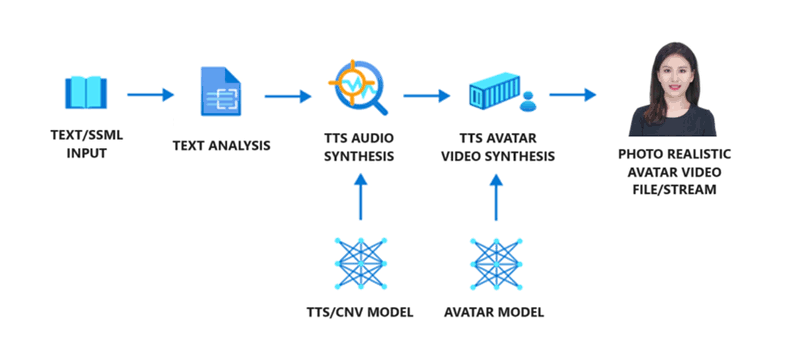
Azure is the unglamorous choice that keeps winning procurement. It maintains dedicated English locales for Nigeria, Kenya, South Africa and Tanzania, with the Nigerian pair Abeo and Ezinne widely used across third-party generators, and it sits inside a portfolio of more than 500 neural voices spanning over 140 languages and locales. Custom Neural Voice lets an organisation build a branded African English voice rather than borrowing one.
The trade-off is personality. Two voices per locale is thin next to a community library running into the thousands, and the reads are competent rather than characterful. For a Nollywood audio drama that is a problem. For a bank rebuilding its interactive voice response system across Lagos and Nairobi, with uptime guarantees and compliance documentation attached, it is exactly the point.
5. HeyGen
HeyGen earns its place by refusing to stop where the audio ends. It offers over 300 voices across more than 175 languages and dialects, including Swahili, Afrikaans, Amharic and Somali alongside regional English, and it carries the same script through voice, presenter, captions and translation in a single workspace. Line-level direction over tone, stress and pauses gives editors the control that usually separates a usable read from a re-record.
It also does the honest thing and says the most authentic African accent is a real one, pointing users toward cloning a consented Nigerian, Ghanaian or South African speaker when a stock voice does not fit. The platform was named a G2 Summer 2026 leader with 23 first-place rankings, which tells you more about workflow polish than about accent fidelity, but for marketing and training teams shipping weekly video that polish is the deciding factor.
6. CAMB.AI
CAMB.AI is the broadcast option. Its MARS models cover more than 150 languages and preserve emotion and prosody across translation, which is why the client list reads the way it does: IMAX for real-time dubbing in cinemas, live Spanish commentary for NASCAR broadcasts, Italian commentary for Ligue 1 at the 2026 Trophee des Champions, cricket coverage with FanCode reaching over 100 million users, and backing from Comcast NBCUniversal.
For African media houses the relevance is straightforward. A Nigerian sports property or a Kenyan documentary series can now be localised without losing the presenter voice that audiences recognise. African language depth is still thinner here than at Intron or Spitch, so treat it as a distribution tool rather than a local-language specialist.
7. Awarri and N-ATLAS
Nigeria did something few countries have attempted. Working with the Federal Ministry of Communications, Innovation and Digital Economy, Awarri built N-ATLAS, an open-source multilingual model announced on the sidelines of the 80th United Nations General Assembly, covering Yoruba, Hausa, Igbo and Pidgin along with speech recognition for Nigerian-accented English. Awarri is also building a voice-first assistant on top of it and runs Langeasy, a crowdsourced local language data platform.
The template is already travelling. The GSMA and five African governments have launched ATLAS Umoja to scale the approach across the continent, with Awarri as technical partner alongside Zindi, Pawa AI and Mozisha. The GSMA argument is commercial as much as cultural: African-language voice interfaces extend digital services to people who are not literate in English or French, which enlarges the addressable market rather than merely serving it. Nobody should expect polished commercial tooling here yet. Expect foundations.
8. Lelapa AI
The Johannesburg company founded in 2022 has become the reference point for southern African voice technology, offering transcription, speech synthesis, translation and sentiment analysis tuned to local languages through its API platform. It has raised a modest 2.5 million dollars in seed funding, but the investor list carries weight beyond the number: Google veteran Jeff Dean, Mozilla Ventures, Atlantica Ventures and InstaDeep co-founder Karim Beguir. CB Insights named it among its most promising AI startups.
Lelapa is the pick when the accent question is really a South African question, spanning eleven official languages and the English spoken alongside them, particularly for customer service and e-commerce deployments where getting the register wrong costs conversions.
9. Narakeet
Narakeet is the workhorse. With around 900 voices across 100 languages, including Nigerian and wider African English accents, it converts PowerPoint decks and Markdown scripts into narrated video quickly and cheaply. Its own case for the accents is refreshingly practical: school lessons land better with Nigerian children and their neighbours when the narrator sounds like the voices they already hear, instead of generic English.
It will not win a fidelity shootout against ElevenLabs. It will let a small education publisher produce a hundred lessons in a week without hiring voice talent, which is a different and often more urgent problem.
10. Easy-Peasy.AI
Rounding out the list is the platform with the most characterful African English bench. Its Nigerian catalogue includes young Igbo male voices suited to pidgin storytelling and folktales, poised Yoruba-accented female narrators, a commanding African voice of God for event work, and warm Lagos-accented reads built for conversational AI. These are contributed voices with real texture, the kind of specificity a general-purpose model rarely produces on demand.
For indie creators, podcast producers and folktale publishers working on a modest budget, the free tier and the range make it a sensible starting point. Verify licensing and consent provenance before commercial release, as you should anywhere in this category.