|
Rank / Brand |
Founded & Base |
Hero Product |
Key Actives |
Price Tier |
Best For |
|---|---|---|---|---|---|
|
1. Topicals |
2019, Santa Monica, USA |
Faded Serum |
Azelaic acid, tranexamic acid, niacinamide, kojic acid, licorice root |
$$ |
Post-acne marks, razor bumps, body pigmentation |
|
2. Eadem |
2020, New York, USA |
Milk Marvel Dark Spot Serum |
Vitamin C, niacinamide, amber algae |
$$$ |
Tone correction without overall lightening |
|
3. La Roche-Posay |
1975, France (L’Oréal) |
Mela B3 Dark Spot Serum |
Melasyl (2-MNG), 10% niacinamide |
$$ |
Stubborn, long-standing dark spots |
|
4. Urban Skin Rx |
2010, Charlotte, USA |
Even Tone Cleansing Bar |
Kojic acid, azelaic acid, vitamin C, niacinamide |
$ |
Clinic-style regimens at drugstore prices |
|
5. Eucerin |
1900, Germany (Beiersdorf) |
Radiant Tone Dual Serum |
Thiamidol, hyaluronic acid, licochalcone A |
$$ |
Melasma and recurring sun-triggered spots |
|
6. SkinCeuticals |
1997, USA (L’Oréal) |
Discoloration Defense |
3% tranexamic acid, 1% niacinamide, 5% kojic acid |
$$$$ |
Pre and post-procedure pigment control |
|
7. Hyper Skin |
2019, New York, USA |
Hyper Clear Vitamin C Serum |
Vitamin C, turmeric, kojic acid, vitamin E |
$$ |
First-time actives users on deeper tones |
|
8. Black Girl Sunscreen |
2016, Miami, USA |
Make It Matte SPF 45 |
Avobenzone, octisalate, jojoba, cacao |
$ |
Daily prevention with zero white cast |
|
9. Paula’s Choice |
1995, Seattle, USA (Unilever) |
Discoloration Repair Serum |
Tranexamic acid, 5% niacinamide, bakuchiol |
$$$ |
Fragrance-free routines and reactive skin |
|
10. COSRX |
2013, Seoul, South Korea |
Advanced Snail 96 Mucin Essence |
Snail secretion filtrate, centella, gentle vitamin C |
$ |
Preventing marks before they form |
1. Topicals
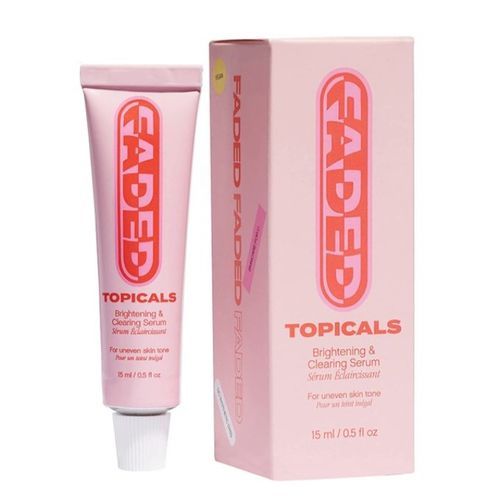
No brand has done more to reframe pigmentation as a medical and emotional reality rather than a vanity project. Founded by Olamide Olowe, who became the youngest Black woman to raise more than a million dollars in venture funding, Topicals built its reputation on Faded, a 38-dollar serum that stacks azelaic acid, tranexamic acid, niacinamide and kojic acid instead of chasing a single miracle ingredient.
The commercial story has kept pace with the cultural one. The company has sold over a million of its viral under-eye masks, trades in the United States, United Kingdom, Canada and Nigeria, completed a French launch last November, and opened 2026 with a funding round backed by basketball star Angel Reese and Afrobeats artist Rema, the latter joining as a creative partner focused on reaching younger male consumers. Olowe has been explicit that Black women were recruited as investors deliberately, both to build wealth and because they had lived the skin concerns the brand treats. For body pigmentation, the area most legacy brands ignore entirely, Topicals remains the most complete offering on the market.
2. Eadem
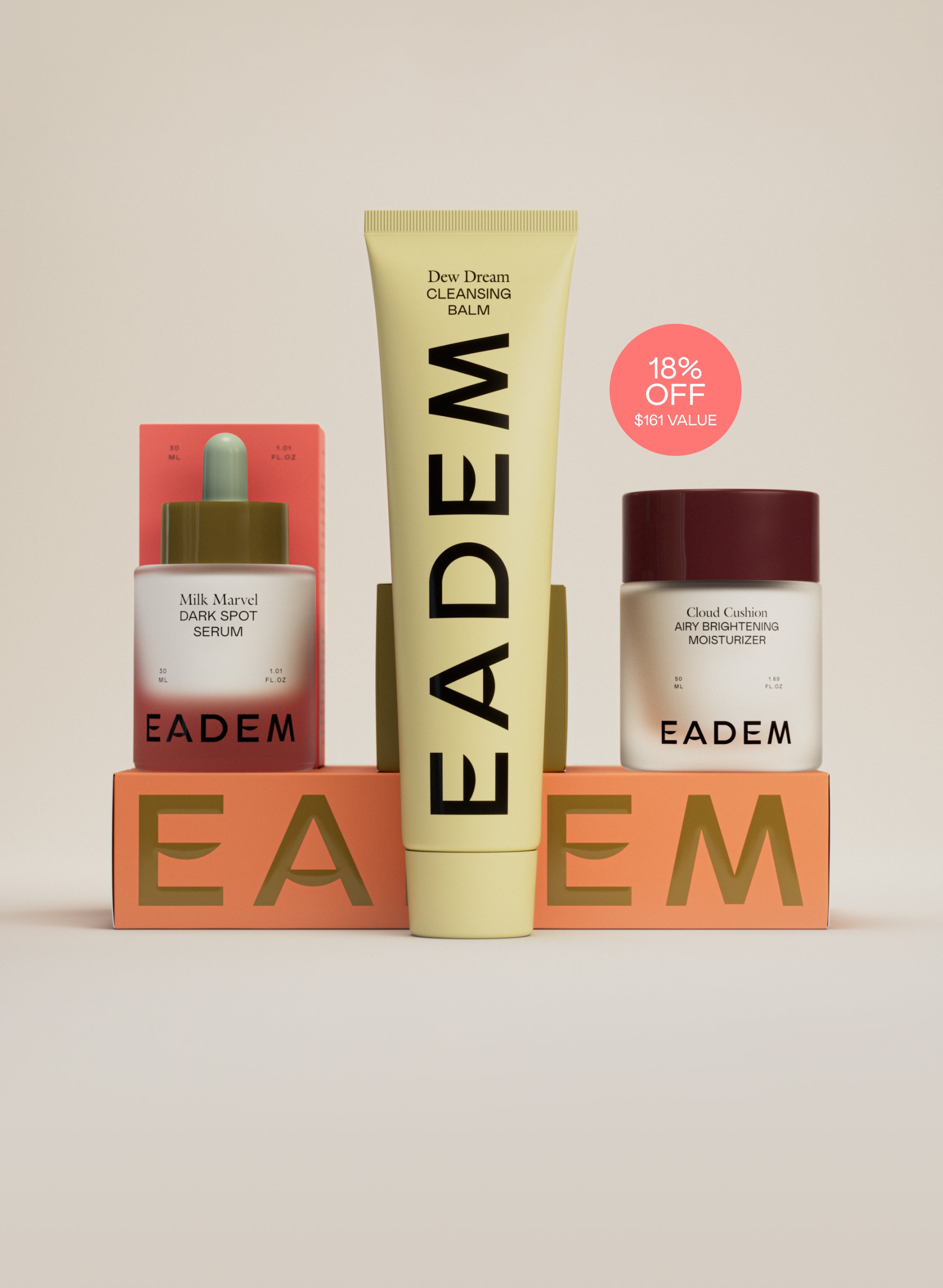
Eadem is the intellectual heavyweight of the group. Co-founded in 2020 by Marie Kouadio Amouzame and Alice Lin Glover, both former tech operators, the brand coined the phrase Smart Melanin to describe its central thesis: a pigment corrector should target excess melanin in a specific spot without flattening the surrounding tone. Its Milk Marvel Dark Spot Serum pairs vitamin C and niacinamide with amber algae, sustainably harvested from the Atlantic, chosen precisely because broad-spectrum inhibitors such as hydroquinone and kojic acid lighten indiscriminately wherever they are applied.
The credentials are unusually strong for a young indie. Eadem received a Glossier grant earmarked for Black-owned businesses, went through Sephora Accelerate, and was named the awardee of the Black Innovators in Skin Health QuickFire Challenge run by Johnson & Johnson Innovation with Neutrogena, which came with grant funding, mentorship and access to the JLABS ecosystem. For readers who have felt uneasy about the colorist undertow in older brightening marketing, Eadem is the brand that argues the point out loud.
3. La Roche-Posay
The most significant pigment innovation of the decade did not come from an indie lab. Melasyl, chemically 2-mercaptonicotinoyl glycine, emerged from eighteen years of L’Oréal research, is protected by 45 patents globally, and was named to TIME’s Best Inventions list in 2025. It works upstream of the enzymes most actives target, capturing melanin precursors before they mature, which is why the brand can claim it respects the skin’s natural tone while reducing localised excess.
The data has been presented at IMCAS in Paris rather than only in press releases: clinical studies showed a meaningful drop in the contrast between spots and surrounding skin by day 56, with spot visibility down around 60 percent by day 84, and consumer studies reporting 85 percent of subjects with significant reduction of persistent dark spots after eight weeks. Crucially, testing spanned all phototypes, a point dermatologist Heather Woolery-Lloyd of the University of Miami has publicly praised. The Mela B3 range has since expanded into a cleanser, an SPF 30 daily moisturiser and a 2026 Double Dose treatment pairing 1 percent melasyl with proxylane.
4. Urban Skin Rx
Rachel Roff started as a medical aesthetician in Charlotte, North Carolina, treating patients whose pigmentation had been mismanaged or dismissed elsewhere, and built the product line backwards from the treatment room. The result is a range that behaves like a protocol rather than a shelf of singles: cleansing bars, pads and serums designed to be layered in sequence, with kojic acid, azelaic acid, vitamin C and niacinamide doing the work.
Its real achievement is distribution. Urban Skin Rx sits in Target, Walmart and Amazon at prices that rarely cross 30 dollars, which matters enormously in a category where the people most affected have historically been offered either a 12-dollar bleaching cream of dubious provenance or a 200-dollar dermatology counter. The brand also refuses the bleaching framing entirely, which has kept it credible as competitors have come and gone.
5. Eucerin
Beiersdorf spent years screening thousands of compounds before landing on thiamidol, a tyrosinase inhibitor with unusual specificity for the human form of the enzyme. That precision is the selling point. Rather than broadly suppressing skin processes, it blocks the exact step at which the melanin signal is amplified, and it has produced meaningful results in melasma, historically the hardest pigmentation to shift.
Sold as Anti-Pigment internationally and Radiant Tone in the United States, the range spans a dual serum, day and night creams, a precision spot corrector and tinted SPF options. It is drugstore-priced, dermatologist-recommended and, for readers who want a single evidence-backed product without a routine overhaul, arguably the most efficient entry point on this list.
6. SkinCeuticals
Discoloration Defense earns its place through a detail that too few rankings acknowledge: in melanin-rich skin, the treatment can cause the problem. Lasers, peels and even microneedling routinely trigger post-inflammatory hyperpigmentation in deeper phototypes, which is why professional-channel brands matter here. SkinCeuticals’ blend of 3 percent tranexamic acid, 1 percent niacinamide and 5 percent kojic acid was built to be used alongside in-office procedures, calming the pigment response before and after intervention.
It is expensive, sold largely through dermatology practices and medi-spas, and worth it mainly for people already under professional care or working on stubborn melasma that has resisted everything gentler. Used casually, it is overkill. Used as part of a supervised plan, it is one of the most reliable formulas available.
7. Hyper Skin
Desiree Verdejo founded Hyper Skin after years of being sold products that either did nothing or stripped her barrier, and the line reflects that scepticism. Hyper Clear, the brightening vitamin C serum built around turmeric and kojic acid, delivers actives at concentrations that work without the sting that sends first-timers running, and the shorter ingredient decks make it easy to identify what is actually doing the lifting.
Widely stocked at Sephora and Target and priced in the mid range, Hyper Skin has become the brand dermatologists suggest to patients who are new to actives and nervous about irritation. Given that irritation is itself a pigment trigger in this skin, gentleness is not a compromise here. It is the mechanism.
8. Black Girl Sunscreen
The most under-used pigmentation treatment in the world is sunscreen, and in deeper skin tones the reason has always been aesthetic rather than medical. Formulas left a grey cast, so people skipped them, and every serum they layered underneath was quietly undone by daily UV and visible light exposure. Shontay Lundy built a company solving exactly that in 2016, and the category has never looked the same.
Its inclusion here is strategic rather than sentimental. Visible and high-energy blue light contribute meaningfully to melasma in darker phototypes, which is why tinted iron-oxide filters have become a clinical recommendation rather than a cosmetic preference. No brightening ingredient outperforms ongoing sun exposure. A pigment routine without daily SPF is a treadmill, and this is the brand that made the treadmill stop for millions of people.
9. Paula’s Choice
Paula Begoun built her reputation dismantling beauty industry claims before selling to Unilever in 2021, and the brand still leads with radical ingredient transparency: every concentration listed, every claim footnoted, no fragrance to complicate a reactive complexion. Its Discoloration Repair Serum combines tranexamic acid with 5 percent niacinamide, a pairing that has quietly become the default modern alternative to hydroquinone.
For readers who want to understand what they are applying rather than trust a marketing story, this is the most legible line available. The trade-off is personality: nothing about the packaging or the copy speaks specifically to melanin-rich skin. The formulas simply work on it, which for many readers is the entire point.
10. COSRX
The Korean approach inverts the whole conversation. Instead of asking how to fade a mark, it asks how to avoid creating one, and in skin that pigments at the slightest provocation that logic is hard to argue with. COSRX built its following on barrier-first staples: the Advanced Snail 96 Mucin Power Essence, centella formulas that calm rather than strip, gentle vitamin C options and hydrocolloid patches that stop a breakout being picked into a six-month shadow.
Dermatologists treating darker phototypes increasingly recommend this sequencing, treating acne aggressively enough to clear it while keeping inflammation low enough that it leaves nothing behind. At under 25 dollars for most of the range, it is also the cheapest insurance policy in this category.